
A useful trading pattern involves identifying traders trapped on the wrong side of the market. When breakout traders enter a move that fails, they must exit, usually at a loss. This forced liquidation creates fuel for the opposite direction, providing opportunity for prepared traders.
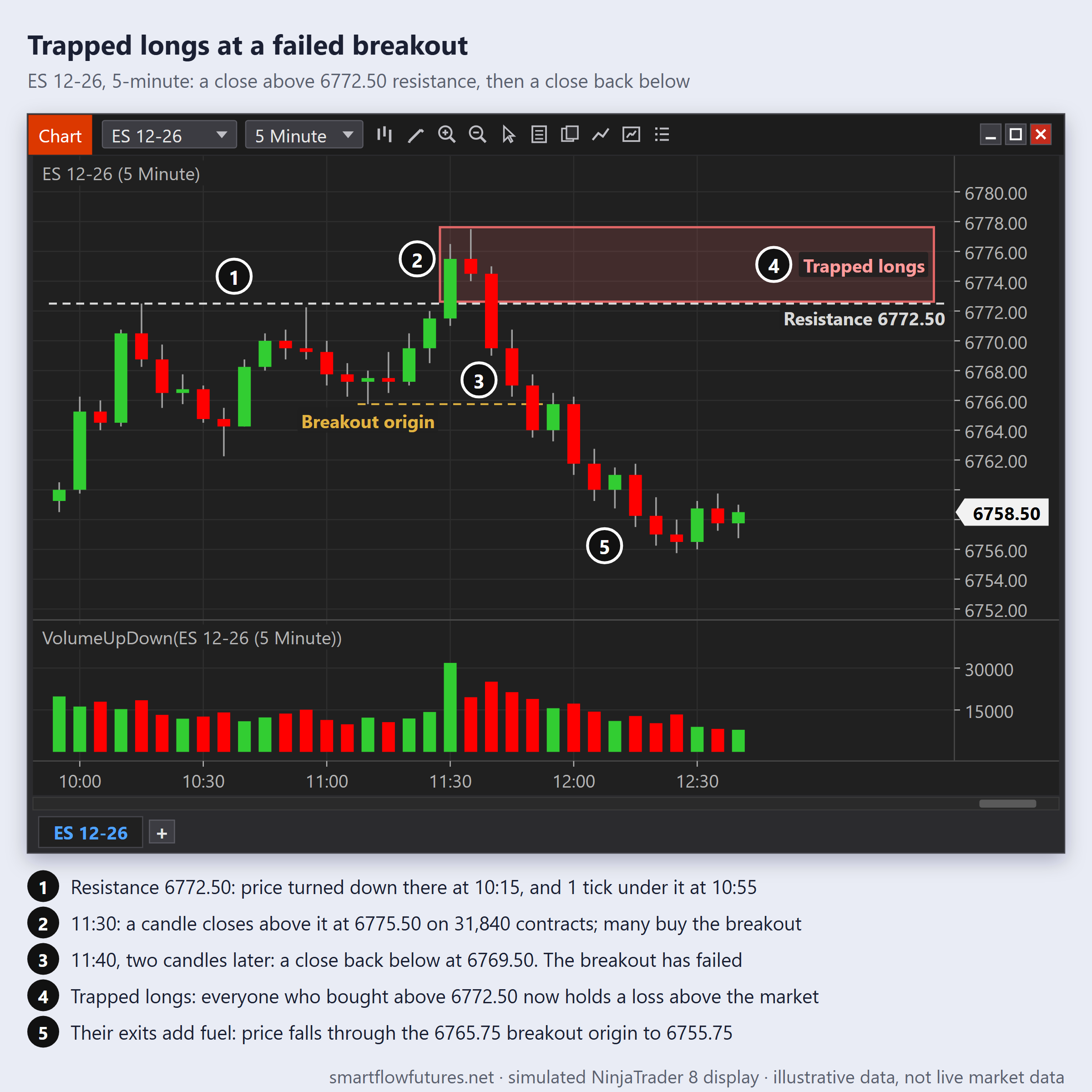
Understanding Trapped Traders
Trapped traders are participants who entered positions based on a signal that subsequently fails. The most common scenario is a breakout trade that reverses:
Trapped Longs: Traders who bought a breakout above resistance, only to see price reverse and fall back below the level. They are now holding losses above the market.
Trapped Shorts: Traders who sold a breakdown below support, only to see price reverse and rally back above the level. They are now holding losses below the market.
When these traders are forced to exit (either by their stops or by panic), their orders add fuel to the reversal.
The Psychology of Trapped Traders
Understanding their psychology helps you trade against them:
Hope: Initially, trapped traders hope price will return to their entry. They hold, expecting a bounce back.
Denial: As losses grow, they rationalize holding. “It will come back.”
Fear: Eventually, fear takes over. The pain of the loss becomes unbearable.
Capitulation: Finally, they exit. This capitulation wave drives price further in the reversal direction.
Your edge is entering after the trap is set but before (or during) the capitulation.
Identifying Trap Setups
Trap Setup 1: False Breakout Above Resistance
Price breaks above resistance with volume and closes above it. Initial move looks convincing. Many traders buy the breakout. Price quickly reverses and closes back below resistance. Everyone who bought the breakout is now trapped. An opening range breakout that fails this way is a textbook example, covered in the ORB trading strategy guide.
Trap Setup 2: False Breakdown Below Support
Price breaks below support with volume and closes below it. Initial move looks convincing. Many traders sell the breakdown. Price quickly reverses and closes back above support. Everyone who sold the breakdown is now trapped.
Trap Setup 3: Stop Hunt Trap
Price briefly spikes through a level, triggering the stops resting beyond it, and the candle closes back inside. This is the liquidity grab concept. Once the stops are triggered and absorbed, price reverses; the traders now trapped are those who entered as price traded through the level.
Order Flow Confirmation of Traps
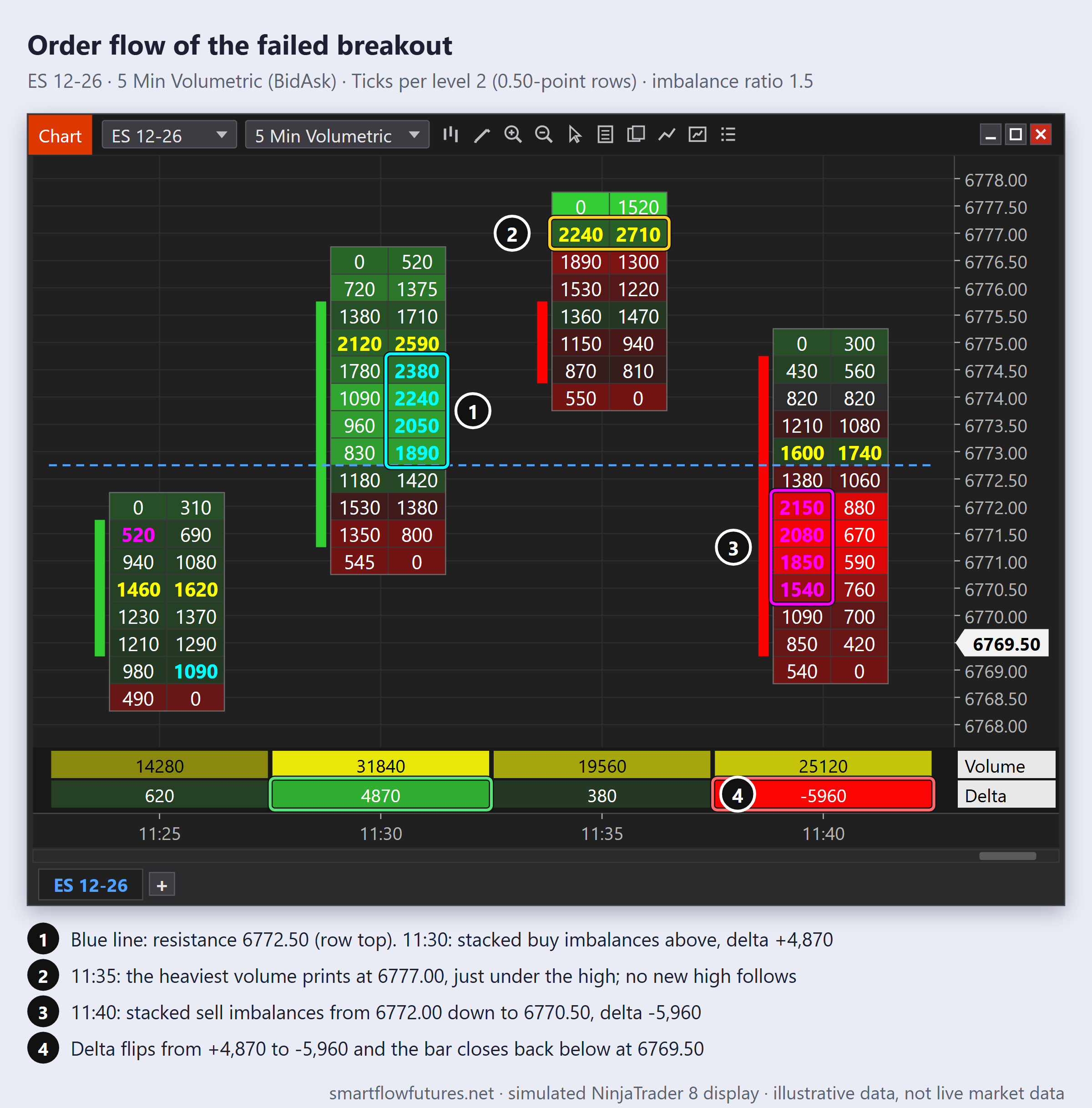
Use Order Flow to confirm trap scenarios:
Aggressive Entry Then Rejection: The breakout shows aggressive volume (trapped traders entering). The reversal shows absorption or opposite-side aggression. This confirms the trap.
Delta Signature: Strong delta in breakout direction (longs entering). Then delta reverses sharply (longs exiting, shorts entering). This pattern confirms the trap spring.
Footprint Evidence: Stacked imbalances in the reversal direction after initial breakout imbalances. The market character has changed.
Trading Trapped Trader Setups
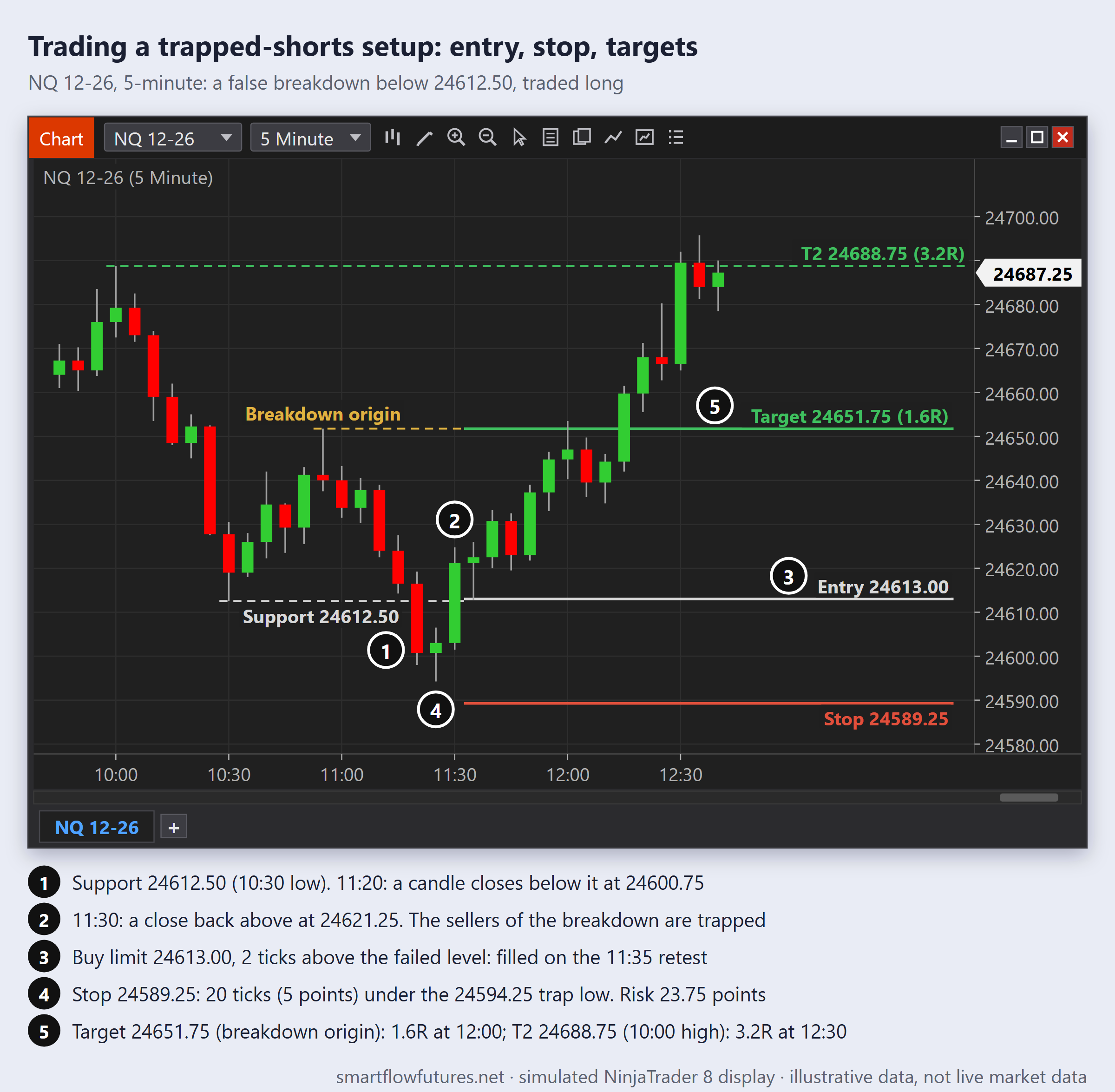
Entry Timing:
Wait for the trap to be confirmed. Do not anticipate. The breakout might be real. Enter after price closes back inside the level, ideally with a reversal candle or Order Flow confirming the reversal.
Entry Technique:
Enter as close to the failed breakout level as possible. This level now acts as support (for bearish traps) or resistance (for bullish traps). Stop goes beyond the trap high/low.
Target Setting:
First target: The origin of the breakout move. Second target: The next significant SMC level. The trapped traders exiting can drive price toward these levels.
Trap Setups and SMC
Trapped trader concepts integrate naturally with SMC:
Liquidity Sweeps: Every liquidity sweep creates trapped traders: the breakout entrants. The stops that were triggered are the liquidity that large opposite orders filled against.
Inducement: Inducement is the minor liquidity price takes just before it reaches an order block or FVG. Traders who entered on the break of that minor level are trapped once price reverses from the zone.
Order Blocks: Wicks through an order block’s far edge that close back inside trap traders, then price respects the original block.
Quality Trap Assessment
Not all traps are equal:
Visible Level: The more obvious the level, the more traders it will trap. Everyone sees major support and resistance.
Volume on Breakout: Higher volume on the failed breakout means more trapped traders.
Speed of Reversal: Quick, decisive reversals trap more traders than slow, grinding ones.
SMC Context: Traps at significant SMC levels with confluence are stronger setups than traps at minor levels.
Common Mistakes
Trading Before Confirmation: Anticipating traps that never materialize. Wait for price to close back inside the level.
Ignoring Context: A trap against strong momentum might not work. Consider higher timeframe direction.
Tight Stops: Trap setups can be volatile. Give trades room beyond the trap extreme.
Key Takeaways
Trapped traders are participants caught on the wrong side by failed breakouts. Their forced exits fuel reversals. Identify traps at obvious support/resistance and after liquidity sweeps. Use Order Flow to confirm the trap (aggressive entry then rejection). Enter after confirmation with stop beyond the trap extreme. The best traps occur at significant SMC levels with Order Flow confirmation.