
Every time you hit the bid or lift the offer, someone is on the other side of your trade. Often, that someone is a market maker or liquidity provider—professional traders whose business is providing the liquidity that allows markets to function.
What is a Market Maker?
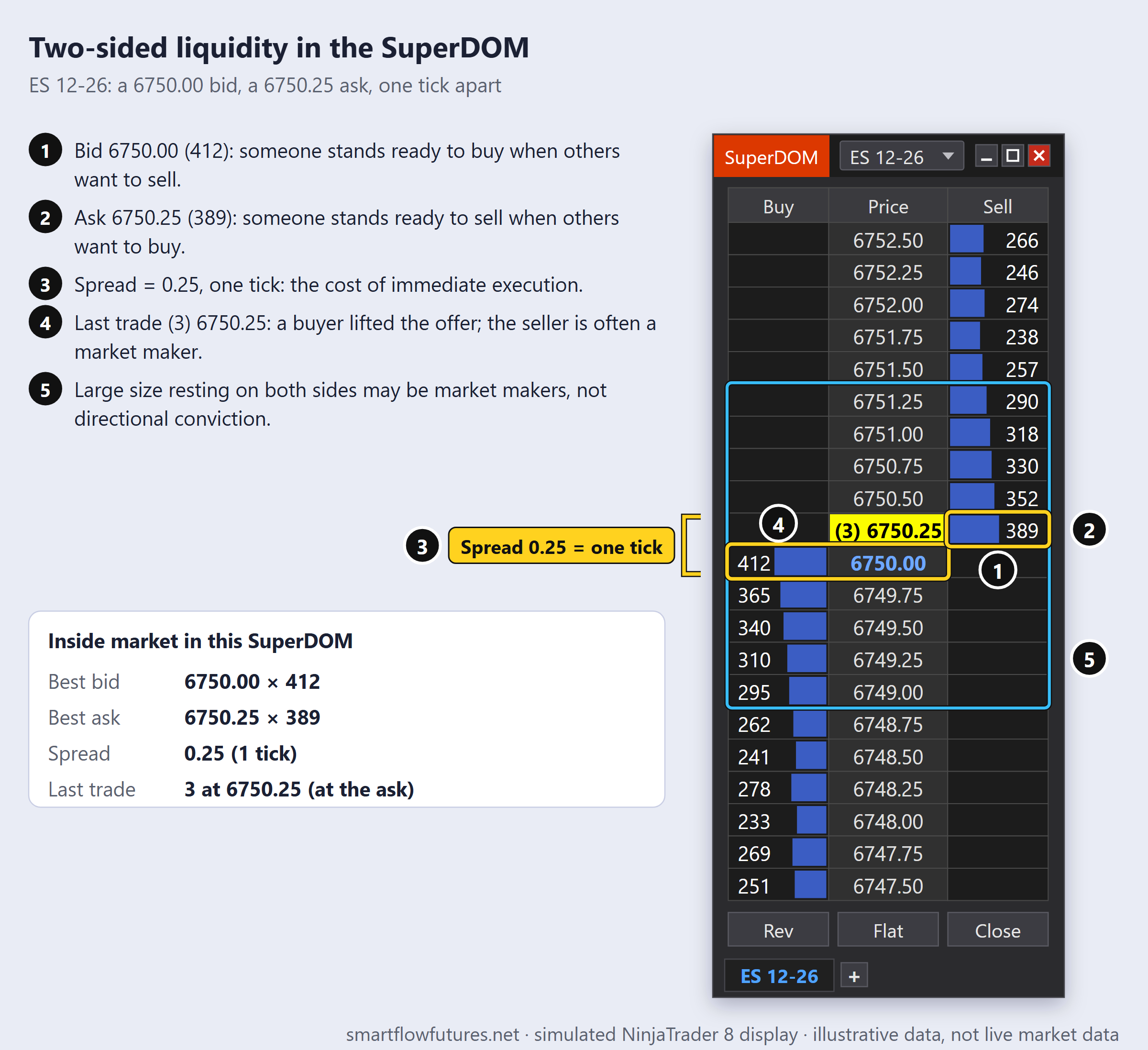
A market maker is a firm or individual that continuously quotes both bid and ask prices, willing to buy or sell at those prices. They make markets by providing two-sided liquidity.
Traditional Role: Stand ready to buy when others want to sell. Stand ready to sell when others want to buy. Profit from the bid-ask spread. Manage inventory risk from accumulated positions.
In futures markets, there are both designated market makers (with exchange agreements) and proprietary trading firms that are, in effect, liquidity providers.
How Market Makers Profit
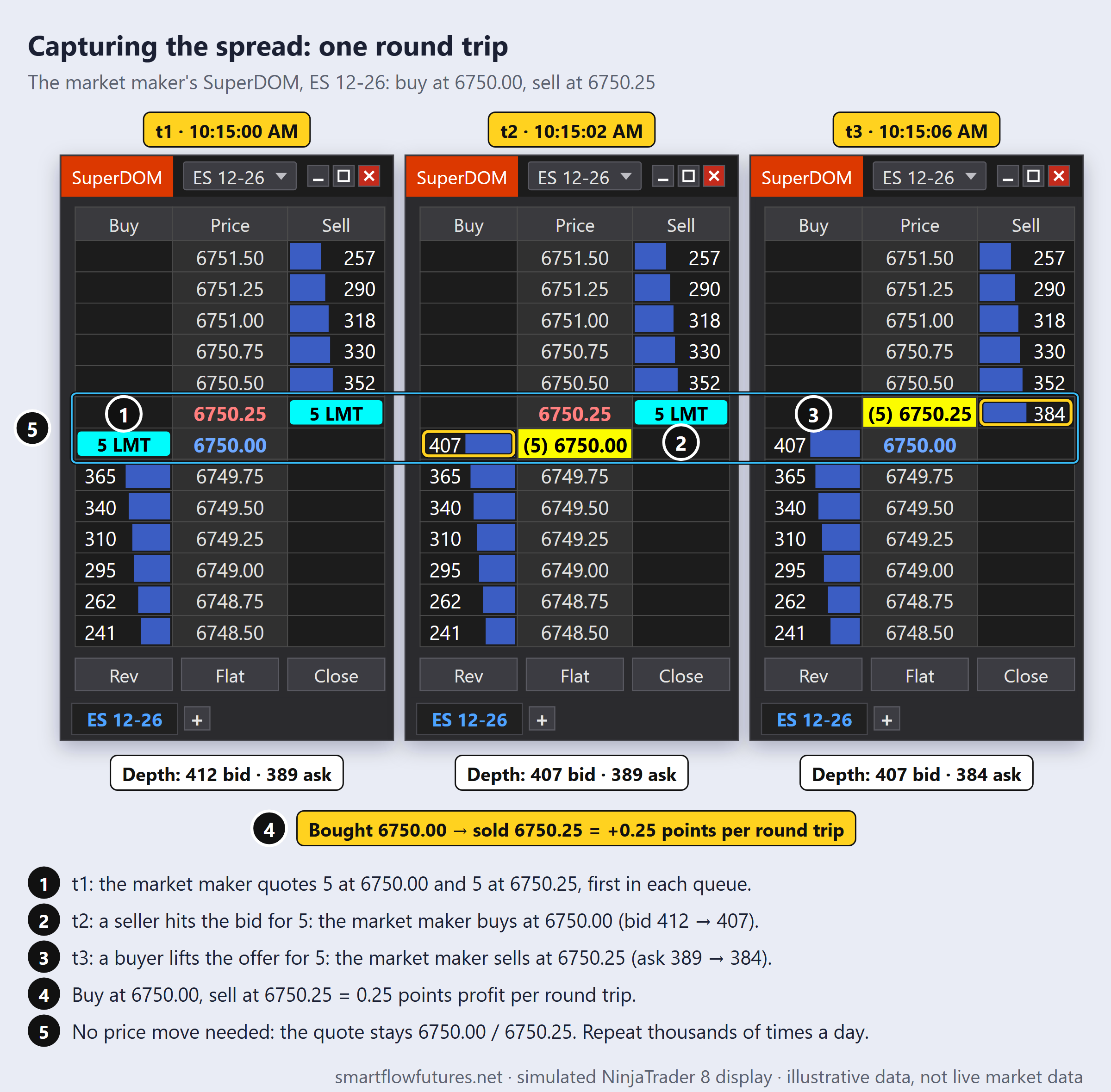
The Spread: Market makers buy at the bid and sell at the ask. If they can do both, they capture the spread. Example: Buy at 6750.00, sell at 6750.25 = 0.25 points profit per round trip.
Volume-Based: Individual spread profits are small. Profitability comes from doing this thousands of times per day. Even a one-tick spread, captured consistently, generates significant returns.
Rebates: Some equity exchanges pay a standard rebate for adding liquidity; on CME, registered liquidity providers earn fee discounts or payments through market-maker incentive programs. Either way, the reward is for supplying resting orders that others can trade against, not for taking liquidity.
Market Maker Risks
Market making is not risk-free:
Adverse Selection: Informed traders know more than market makers. When an informed trader buys, they likely know the price will rise. The market maker sells to them and then price moves against the position.
Inventory Risk: Market makers accumulate positions as they fill orders. If more buyers hit them, they become short. If more sellers hit them, they become long. They must manage this inventory, often at a loss if directional traders are correct.
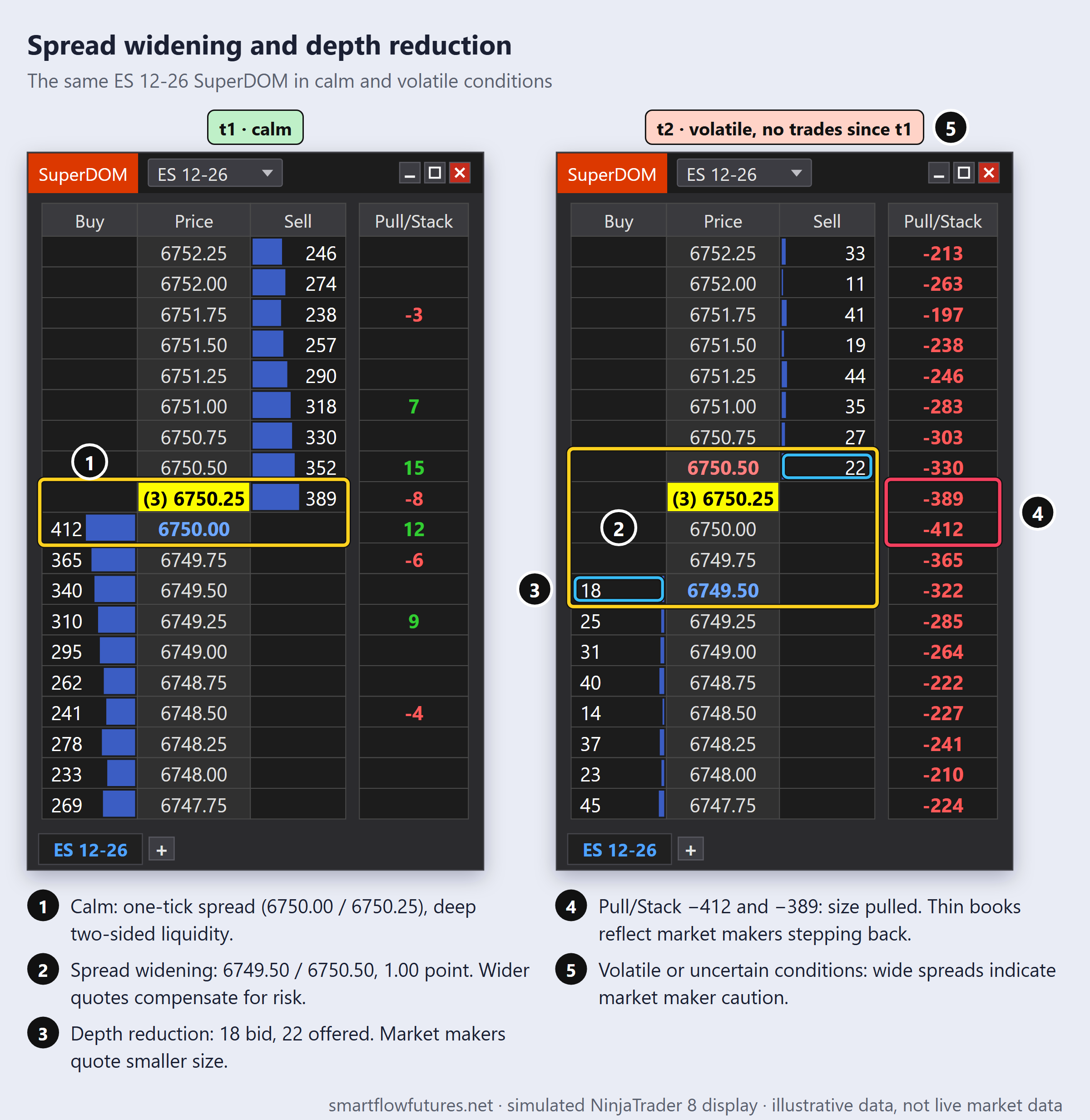
Volatility Risk: During high volatility, spreads widen and depth decreases. Market makers reduce exposure when risk is highest.
Market Maker Behavior
Understanding market maker behavior helps interpret order flow:
Quote Adjustment: Market makers constantly adjust their quotes based on inventory, market conditions, and information. If they are getting hit on their bid consistently (accumulating long inventory), they will lower their bid (and usually their ask) to discourage more sellers from hitting it and to attract buyers.
Spread Widening: In volatile or uncertain conditions, market makers widen spreads. This compensates for increased risk. Wide spreads indicate market maker caution.
Depth Reduction: Market makers may reduce the size they quote in risky conditions. Thin books during volatility reflect market makers stepping back.
Liquidity Providers vs Market Makers
The terms are often used interchangeably, but there are distinctions:
Market Makers: Often have formal agreements with exchanges. Required to maintain quotes within certain parameters. Receive fee incentives in exchange.
Liquidity Providers: Broader term including any entity that provides liquidity. Includes market makers, proprietary trading firms, and even informed traders who use limit orders.
In modern electronic markets, the line is blurred. Many firms provide liquidity without formal market maker status.
The Impact on Your Trading
Who You Trade Against: When you use market orders, you often trade against market makers. They take the other side of your trade and manage the resulting position.
Spread Costs: The spread you pay goes largely to liquidity providers. This is the cost of immediate execution.
Order Book Interpretation: Many orders in the book are from market makers. Large, stable quotes may be market makers. These orders provide liquidity but may not indicate directional conviction.
Market Makers and SMC Concepts
Some connections between market maker behavior and SMC:
Stop Hunts: Market makers are often blamed for stop hunts. Reality is more nuanced—market makers may not deliberately hunt stops, but their inventory management can push prices into stop clusters.
Order Blocks: Areas where market makers accumulated or distributed significant inventory may become order blocks. Price returning to these areas may trigger market maker activity.
Liquidity: Market makers need liquidity to manage inventory. Stop clusters provide this liquidity.
Trading with Market Maker Awareness
Use Limit Orders: Provide liquidity rather than taking it when possible. Reduces spread costs, but a resting order is exposed to adverse selection (it may fill just before price moves against you) and may not fill at all.
Avoid Thin Markets: When market makers step back (wide spreads, thin depth), execution costs increase. Consider waiting for better conditions.
Understand Your Edge: If you have directional information, you can profit at market maker expense. If you do not, market makers profit at yours.
Key Takeaways
Market makers provide two-sided liquidity, profiting from the spread. They face adverse selection and inventory risk. Their behavior (quote adjustment, spread widening) reveals market conditions. You often trade against market makers when using market orders. Use limit orders when possible to reduce costs. Market maker activity can influence price movement around key levels.