
While the Asian session may seem uneventful compared to London and New York, it sets up the range and liquidity pool that London and New York trade against. Understanding how the Asian session builds ranges and sets up liquidity is essential for complete market analysis.
Asian Session Timing
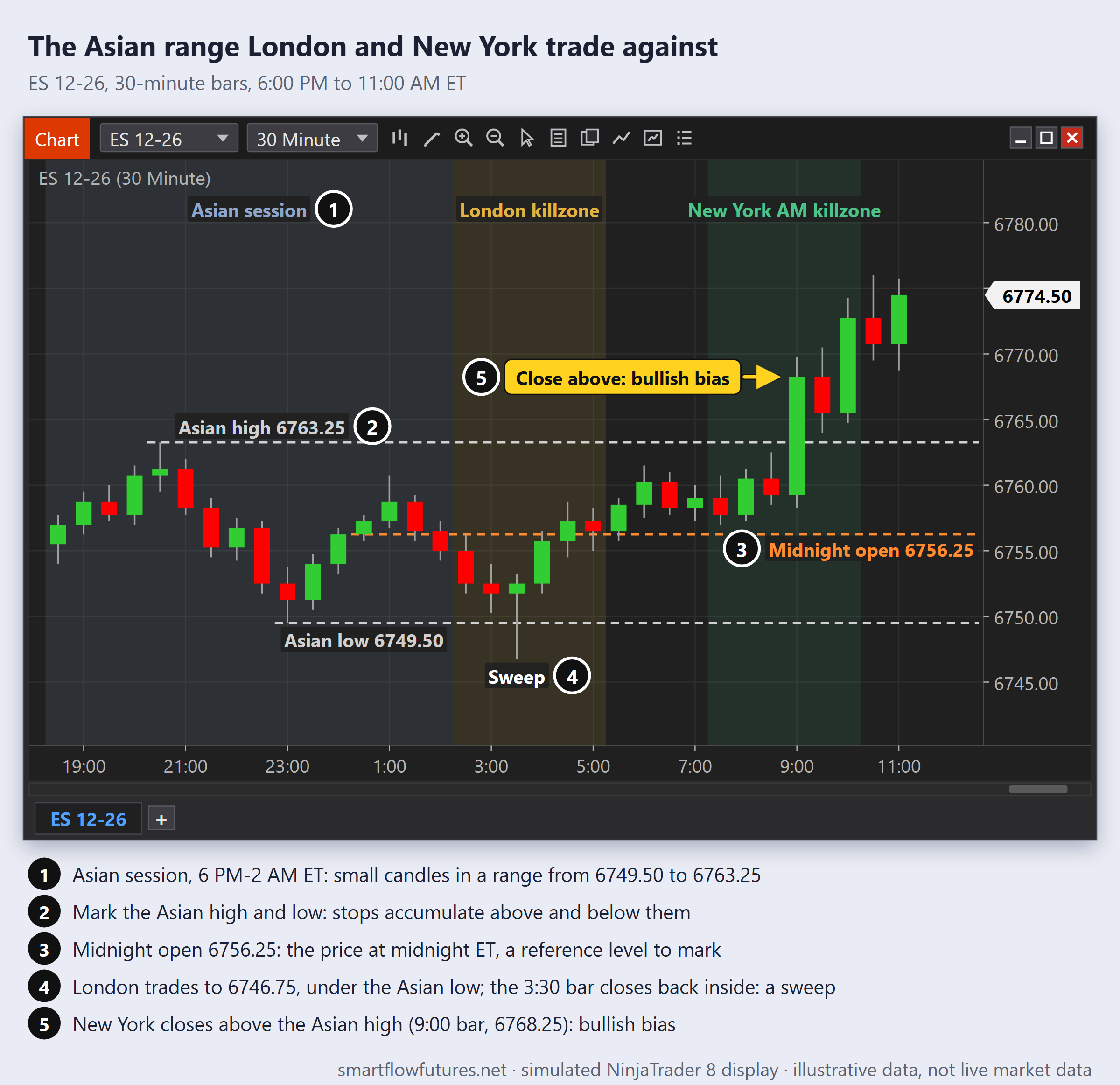
The Asian session for futures traders runs from approximately 6:00 PM to 2:00 AM Eastern Time. Key markets active during this period include Tokyo Stock Exchange, Hong Kong and Shanghai markets, Sydney and Singapore markets, and the start of trading in the Middle East.
For US futures, this is “overnight” trading when volume is typically lower.
The Role of Asian Session
The Asian session does a few specific things in the daily cycle:
Range Building: Price typically consolidates, creating a range that London and NY will react to. This range sets the Asian high and low that become liquidity targets (the overnight high and low run until the 9:30 AM cash open and also include London).
Liquidity Accumulation: Stops accumulate above and below the Asian range. This liquidity pool attracts price during more active sessions.
Digestion: Markets digest the previous NY sessions moves. Price retraces or consolidates as the market processes information.
Setup Creation: Patterns form during Asia that complete during London or NY, including triangles, flags, and other consolidation structures.
Asian Session Characteristics
Lower Volatility: Expect smaller moves and more ranging price action. Position sizing can be tricky as normal indicators of significance are muted.
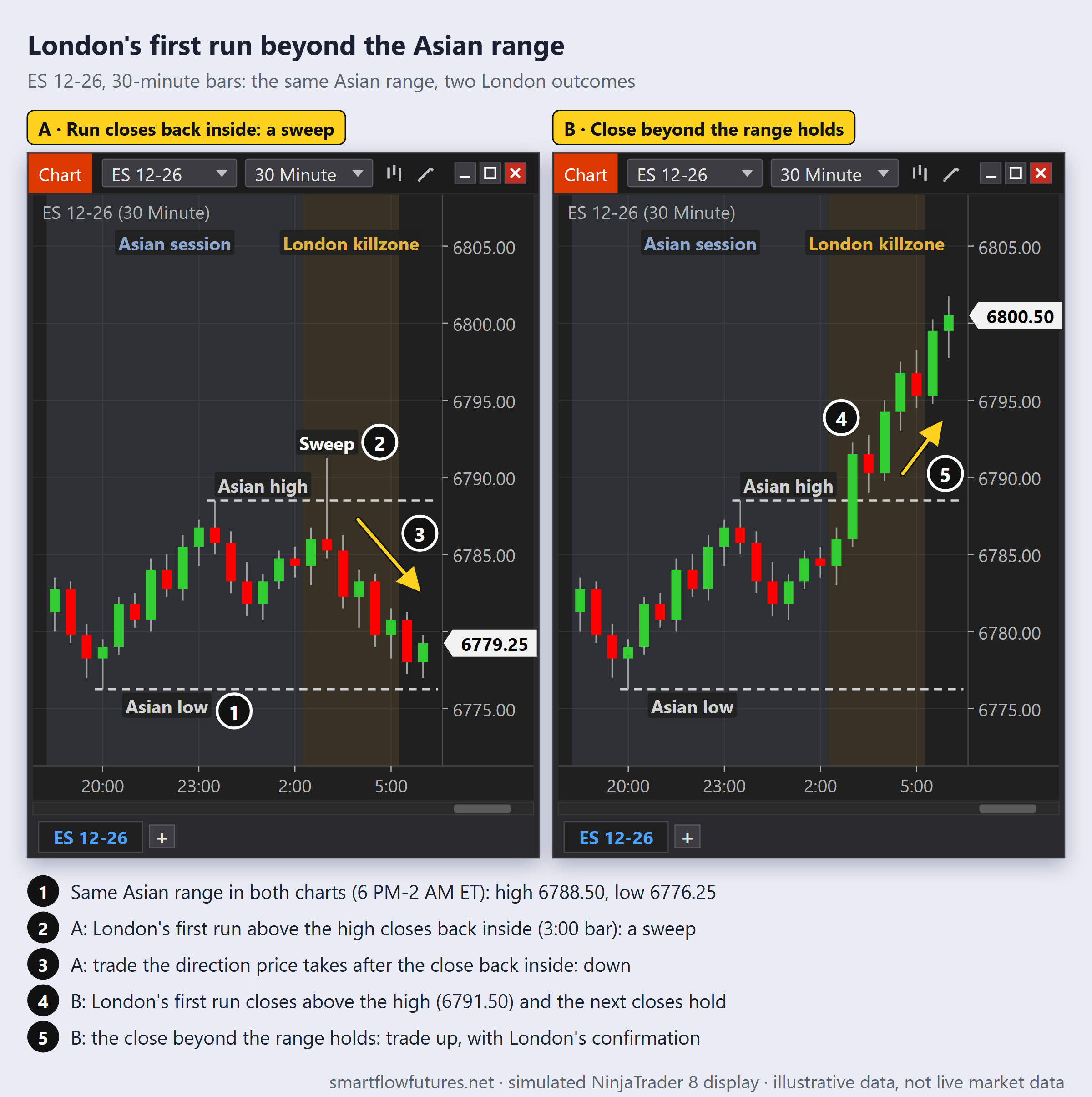
Less Follow-Through: Breakouts during Asian session often fail or lack conviction. Wait for London confirmation of any Asian move: a close beyond the Asian range that holds, not London’s first push through it, which is often a false move.
Reactive: Price reacts to overnight news but major trends rarely start during Asia (for US futures).
Technical Trading: With less institutional presence, price often respects technical levels more clearly.
Trading the Asian Session
If you choose to trade during Asian hours:
Range Trading: The most appropriate strategy. Buy near Asian session support, sell near resistance. Use tight stops as ranges can break.
Fade Extremes: When price reaches extremes of recent ranges, consider fading for mean reversion. Asian session often sees price return to middle of ranges.
Respect the Range: Don’t try to trade breakouts aggressively during Asia. Wait for London confirmation.
Reduced Size: Lower volume means higher relative impact of your orders. Consider smaller position sizes.
Asian Range as a Tool
For most traders, the Asian range is more useful as an analysis tool than a trading window:
Mark the Range: Draw horizontal lines at the Asian session high and low. These become key levels for London and NY trading.
Anticipate Sweeps: Expect London or NY to target one side of the Asian range. This sweep provides entry opportunities.
Bias Indicator: If price closes above the Asian range in NY, bias is bullish. Below the range, bearish. This simple indicator provides context.
The Midnight Open
Within the Asian session, the midnight open (00:00 New York time) is worth tracking on its own:
It marks the start of the “true day” for many SMC traders. Price often uses midnight open as a pivot point. London and NY frequently return to test this level. Trade setups form around reactions to the midnight open.
Asian Session and Order Flow
Order flow during Asian session differs from active sessions:
Lower volume means footprint charts are less meaningful. DOM analysis is less reliable due to thin order books. Delta is easier to manipulate with less participation. Focus on higher timeframe levels rather than lower timeframe order flow signals.
When Asian Session Matters More
Certain situations increase Asian session importance:
Major Asian Economic Data: Bank of Japan decisions, Chinese economic releases, or Australian data create genuine moves.
Global Risk Events: Overnight news events (geopolitical developments, crisis situations) can override normal Asian patterns.
Sunday Open: The Sunday 6 PM ET open is the weekly open, a reference level for the whole week, and can see significant gaps and positioning.
Month/Quarter End: Institutional rebalancing can occur during any session.
Practical Application
Here’s how to incorporate Asian session into your trading:
Evening Review: Before Asian session begins, review the days NY action. Note key levels and potential overnight scenarios.
Morning Preparation: Before trading NY, review what happened overnight. Mark the Asian range. Note any significant moves or patterns.
Use as Filter: The first run beyond the Asian range in London is often the manipulation: trade the direction price takes once the candle that made the run closes back inside the range (a sweep), or after a close beyond the range holds. Counter-trend trades should respect Asian range extremes.
Key Takeaways
Asian session (6 PM – 2 AM ET) typically builds ranges rather than trends. The Asian range high and low become liquidity targets for London and NY. Lower volatility makes range trading appropriate if trading these hours. The midnight open (00:00 NY time) is a reference level worth marking each session. Use Asian session for analysis rather than active trading for best results.