
Just as each trading session has its character, each day of the week tends to show its own character. Understanding weekly profiles helps you align your trading with the natural rhythm of markets and can improve your timing.
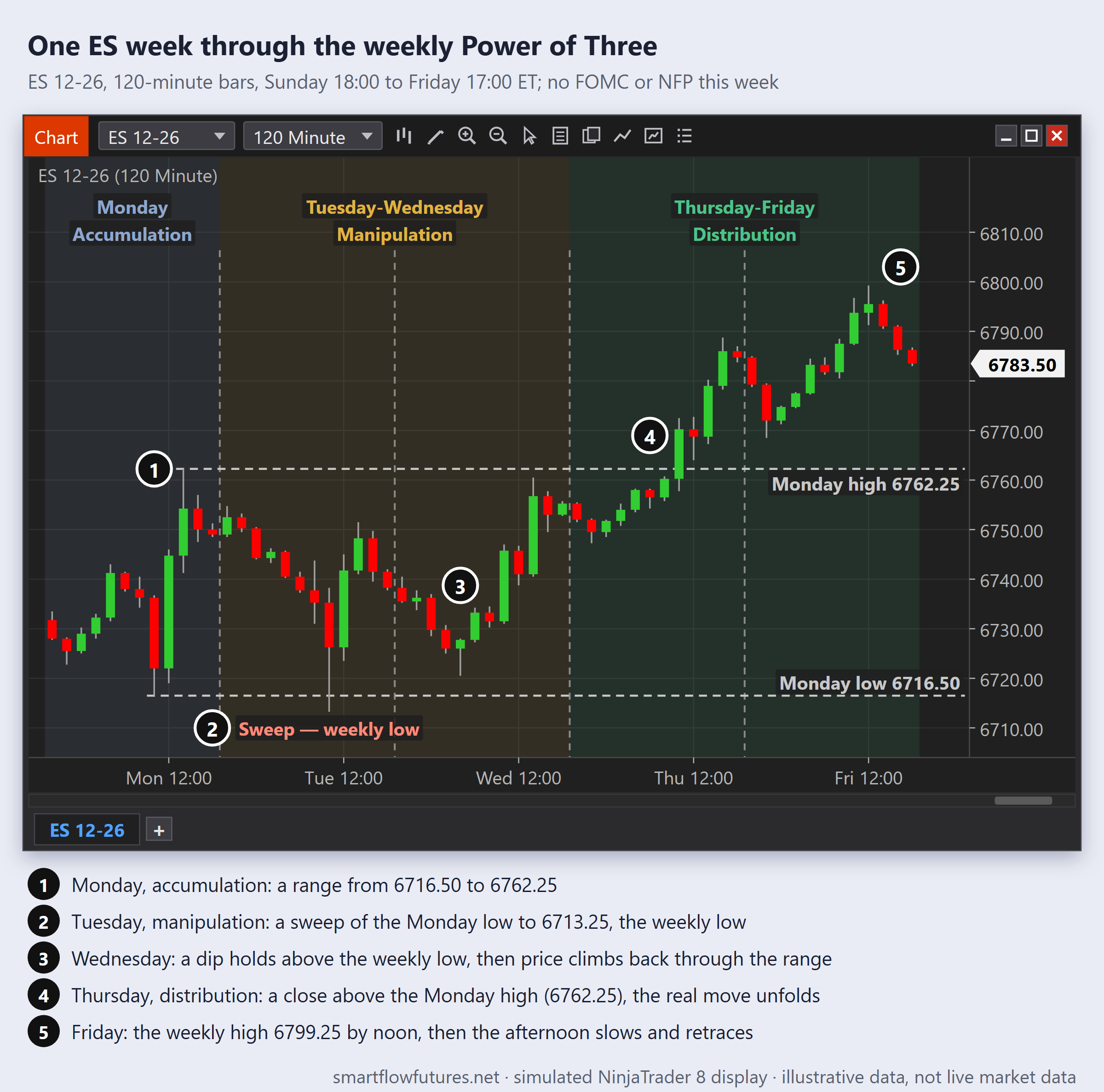
The Weekly Market Rhythm
Institutional traders follow weekly schedules. They analyze over weekends, position early in the week, adjust mid-week, and square up before weekends. This creates recurring tendencies in price behavior.
Sunday/Monday: The Weekly Open
Sunday (6 PM ET):
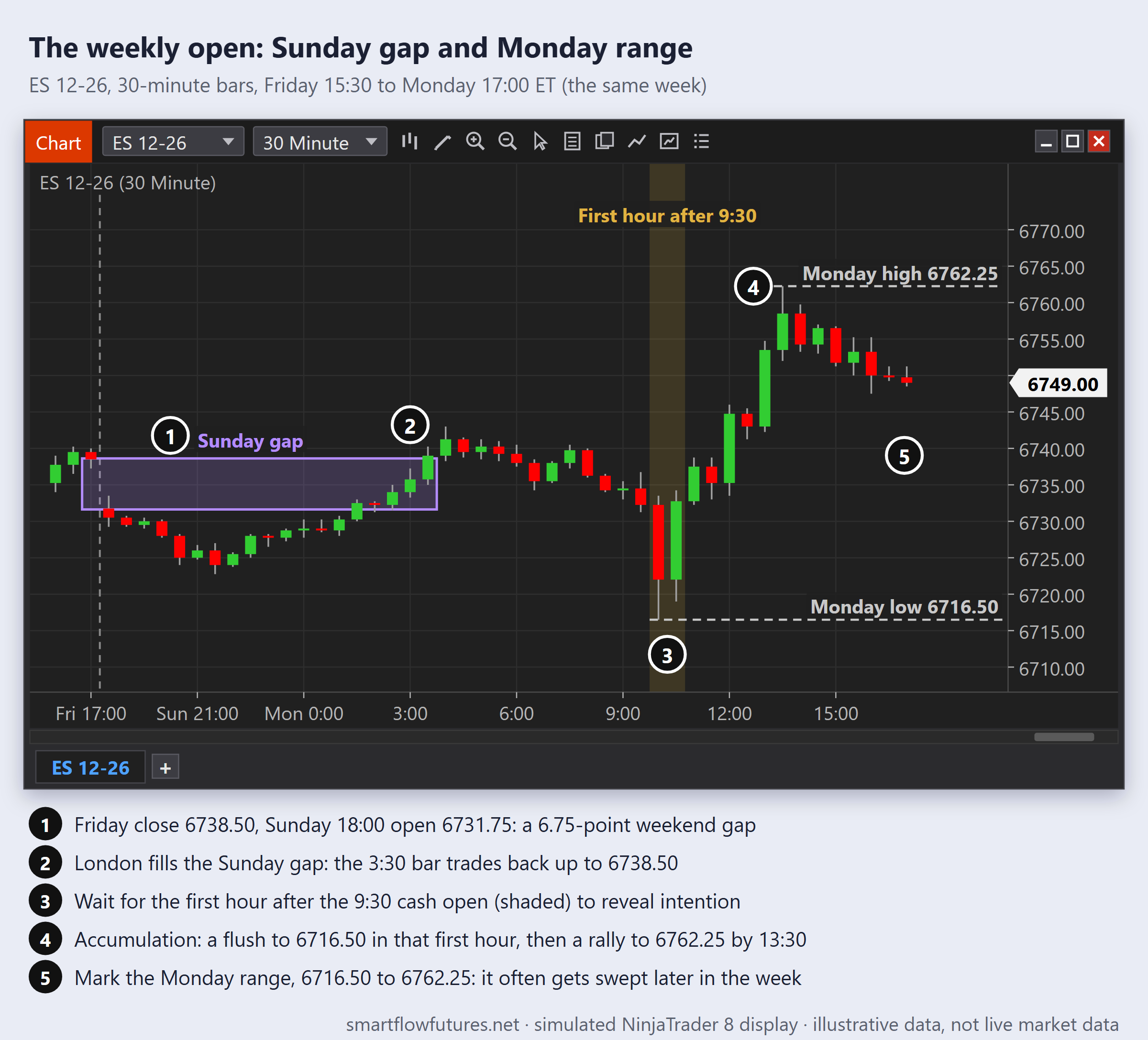
Markets gap from Friday close based on weekend news. Initial positioning begins. Volatility can be elevated or subdued depending on events. Gap fills or gap continuations set early week tone.
Monday:
Institutions establish weekly positions. Expect accumulation: a range, and false moves inside it, as smart money builds positions. Key weekly levels often tested. Mondays often range, though some trend depending on the prior week’s close.
Trading Monday:
Wait for the first hour after the 9:30 AM ET cash open to reveal intention. Trade with the developing weekly bias. Be aware of potential Sunday gap fills. Mark the Monday range. It often gets swept later in the week.
Tuesday/Wednesday: Mid-Week Action
Tuesday:
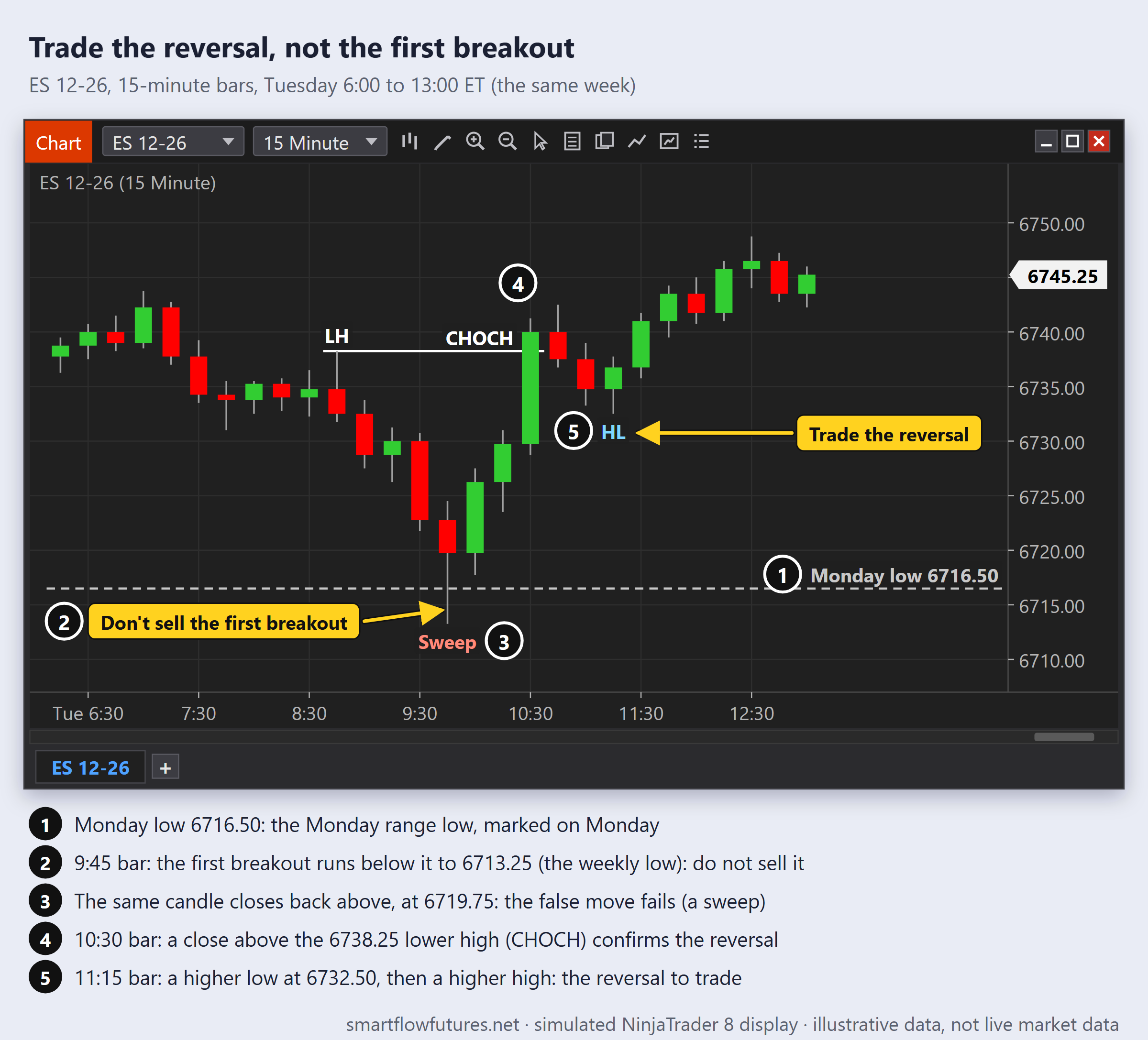
Often makes the week’s main false move (the manipulation); the weekly high or low frequently forms on Tuesday or Wednesday. Tuesday is often treated as the “real” start of the trading week. Setups improve once the false move fails and direction clarifies.
Wednesday:
Often a volatile day, especially when FOMC is scheduled. Major reversals often occur mid-week. Weekly high or low often formed on Wednesday.
Trading Mid-Week:
These are often the most active days, and the weekly high or low frequently forms here. Expect false moves at the week’s extremes: trade the reversal once the false move fails, not the first breakout.
Thursday/Friday: Week Close
Thursday:
Distribution: continuation of the direction set after the mid-week extreme. Profit-taking may begin late in the day. Economic data can still create moves. Weekly high/low often protected or extended.
Friday:
Position squaring before weekend. Lower volume, especially afternoon. Potential for sharp moves as traders cover. NFP release days (usually the first Friday of the month) are exceptional. Treat them differently.
Trading Late Week:
Reduce expectations on Friday as the week winds down. Friday afternoons are typically best avoided. Consider closing positions before weekend. Watch for late-Friday retracements and stop hunts.
Weekly Power of Three
This course applies a popular ICT/SMC concept, the Power of Three, to the week:
Accumulation (Monday): Smart money builds positions. Price may range or make false moves as accumulation occurs.
Manipulation (Tuesday-Wednesday): False moves trap retail traders. Liquidity is grabbed through stop hunts.
Distribution (Thursday-Friday): The real move unfolds. Smart money distributes to late-entering retail traders. Friday often slows or retraces late in the day.
This is a simplified model of tendencies to test, not statistics. Not every week follows it exactly, but it provides a useful framework.
Weekly Range Development
Understanding how the weekly range develops helps with targets and risk management:
Early Week: Range begins forming. Extremes may not hold.
Mid-Week: Weekly high or low often established (Tuesday or Wednesday).
Late Week: The mid-week extreme often holds while the distribution leg pushes toward or beyond the other side of the range. Extremes become targets for the following week.
Day-of-Week Tendencies
Common tendencies (observations to test on your own data, not statistics):
Monday: Average or below-average range. Direction-finding day. Tuesday: Above-average participation; false moves are common. Wednesday: Often volatile, especially in FOMC weeks; frequent reversals. Thursday: Average activity, often continuation of the move set after the mid-week extreme. Friday: Below-average, especially afternoon. Position squaring.
Aligning Trades with Weekly Profile
Practical application:
Monday: Lighter trading, observe direction. Small positions if taking trades.
Tuesday: Trade with the weekly bias at your standard risk.
Wednesday: Active trading day. Watch for reversals at extremes. Standard risk per trade.
Thursday: The distribution leg often runs: trade with the direction set after the mid-week extreme, and manage existing positions.
Friday: Close or reduce positions. Limited new trades. Avoid afternoon entirely.
News Events and Weekly Patterns
Scheduled events can shift weekly dynamics:
FOMC weeks see Wednesday/Thursday volatility concentrated around announcement. NFP Fridays override normal Friday patterns. Major earnings can shift any day’s character. Holiday weeks have compressed patterns.
Key Takeaways
Each day of the trading week has its own character and purpose. Monday often builds a range; Tuesday and Wednesday often set the weekly high or low with a false move; Thursday and Friday carry the real move, which often slows late on Friday. Wednesday is often a volatile and important day, especially when FOMC is scheduled. Align your trading intensity with the weekly rhythm. Consider the “Power of Three” framework: accumulation, manipulation, distribution.