
For futures traders, the New York killzone is the main event. This is when US markets open, institutional participation peaks, and the biggest moves of the day typically unfold. Mastering the New York killzone is essential for any serious futures trader.
New York Killzone Defined
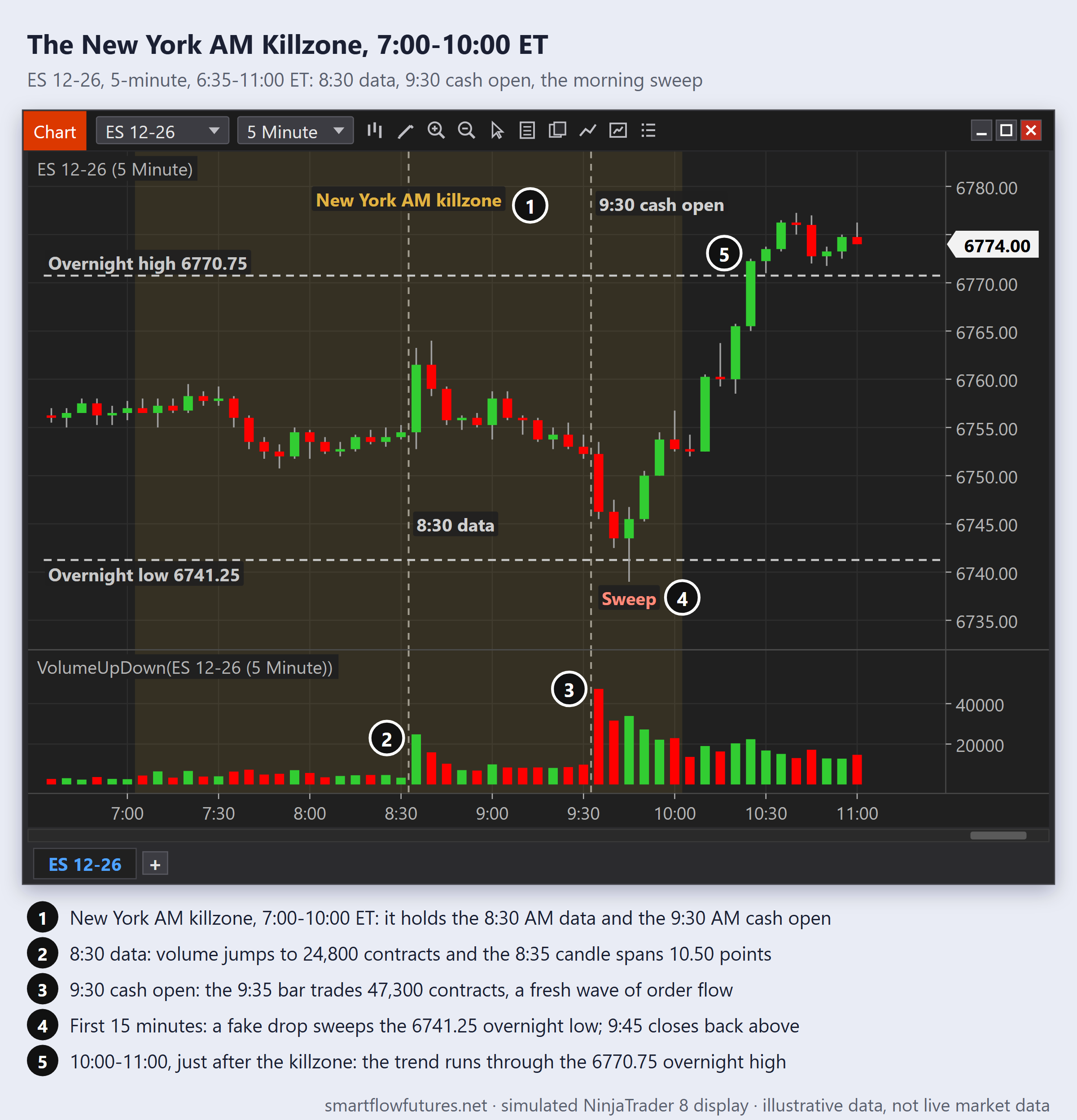
The New York killzone spans approximately 7:00 AM to 10:00 AM Eastern Time. This window captures: the pre-market preparation period (7-8 AM), the initial reaction to the levels set in Asia and the London killzone and to any 8:30 AM data (8-9:30 AM), the New York cash open (9:30 AM), and the establishment of direction after the open (9:30-10 AM).
However, the extended active period runs until about noon ET, while the US cash session is in full swing and London is still open.
Why New York is King
Several factors make the New York killzone dominant for futures trading:
Maximum Participation: US institutions, European traders still active, algorithmic trading at full capacity. More participants means more volume and cleaner moves.
Economic Releases: Major US economic data releases (NFP, CPI, GDP, etc.) hit at 8:30 AM ET. These catalyze significant moves.
Equity Cash Open: The 9:30 AM stock market open brings a fresh wave of order flow. Futures often make major moves around this time.
Institutional Headquarters: Major banks and hedge funds are in New York and Chicago. This is their primary trading window.
New York Price Behavior Patterns
Price tends to follow recognizable patterns during and after the NY killzone:
The Morning Sweep: Price often sweeps the overnight high or low soon after the 9:30 AM open (or, before the open, the Asian or London killzone high or low), grabbing liquidity before reversing toward the daily direction.
The 9:30 Fake: The first 15 minutes after the stock market open often sees false moves. Wait for this noise to settle before trading.
Mid-Morning Trend: After initial volatility, a directional trend often emerges between 10-11 AM, just after the killzone. This can run until the London close (noon ET).
Post-Noon Consolidation: After noon, as London winds down, expect decreased volatility and more choppy action.
Trading the New York Killzone
Pre-Market Preparation (7-8 AM):
Review overnight price action. Mark the Asian range high and low and the London killzone high and low. Identify key SMC levels (order blocks, FVGs, liquidity pools). Check economic calendar for any releases.
Initial Reaction (8-9:30 AM):
Watch for sweeps of the Asian high or low and the London killzone high or low. Note how price reacts to economic data if released. Begin forming directional bias based on price action. Wait for clear setups. Don’t force trades.
Post-Open Trading (9:30-11 AM; the last hour runs past the killzone):
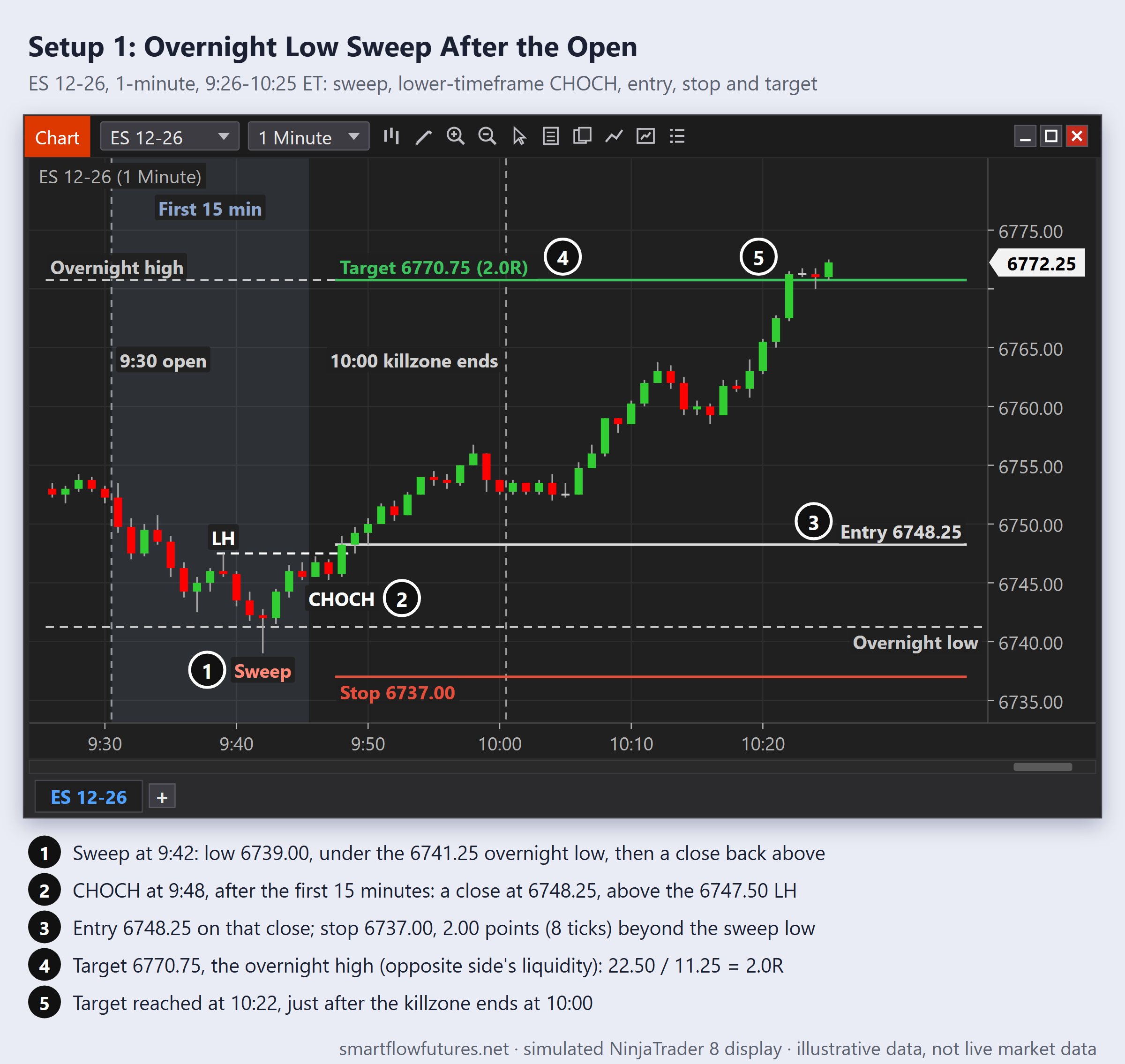
Let the first 15 minutes settle. Look for BOS or CHOCH to confirm direction. Trade retracements to order blocks or FVGs. Target opposite liquidity or key levels.
New York Killzone Setups
Setup 1: Overnight Level Sweep
Price sweeps the overnight high or low soon after the 9:30 AM open. Look for reversal confirmation (rejection candle, lower timeframe CHOCH). Enter with stops beyond the sweep, targeting the opposite side’s liquidity.
Setup 2: 9:30 Trap and Reverse
The first 15 minutes after the equity open often creates false moves. Wait for the trap to form, then trade the reversal. The setup is stronger if it aligns with a liquidity sweep.
Setup 3: Mid-Morning Trend Entry (10-11 AM, just after the killzone)
After initial volatility, identify the trend direction. Trade pullbacks to order blocks or FVGs within the trend. Target swing points or external liquidity.
News Events During New York
Major economic releases significantly impact NY session trading:
High-Impact Events (8:30 AM): NFP, CPI, GDP, etc. Expect 100-300+ point moves in NQ. Consider staying flat through the release or trading the reaction.
Fed Announcements (2:00 PM): FOMC statements and the Fed Chair’s press conference (2:30 PM) cause major volatility. These occur outside the traditional killzone but create trading opportunities.
Strategy Around News: Clear your positions before high-impact releases. Wait for the initial spike and reversal. Trade the secondary reaction, not the initial move.
Risk Management in New York
The increased volatility of New York requires disciplined risk management:
Consider reduced position size during the first 30 minutes after the 9:30 AM open. Use wider stops to account for volatility, but never risk more than your maximum per trade. Set a maximum daily loss limit, and stop trading for the day if you hit it during the NY session. Watch for stop hunting on obvious levels.
After the Killzone
What to do post-killzone:
Evaluate your trades (what worked and what didn’t). Note the levels established during the session. If holding positions, manage them with trailing stops. Prepare for potential afternoon volatility (Fed days, etc.).
Key Takeaways
The New York killzone (7 AM – 10 AM ET) offers the best opportunities for futures traders. Watch for sweeps of the overnight high or low soon after the 9:30 AM open. Let the 9:30 AM cash open volatility settle before trading. Trade retracements within the emerging trend direction. Respect news events and adjust risk management accordingly.