
Building on our understanding of liquidity pools, we now focus on external liquidity: the stops and orders resting beyond the current trading range. Where this liquidity sits tells you where price is likely headed, and where to set your targets.
Defining External Liquidity
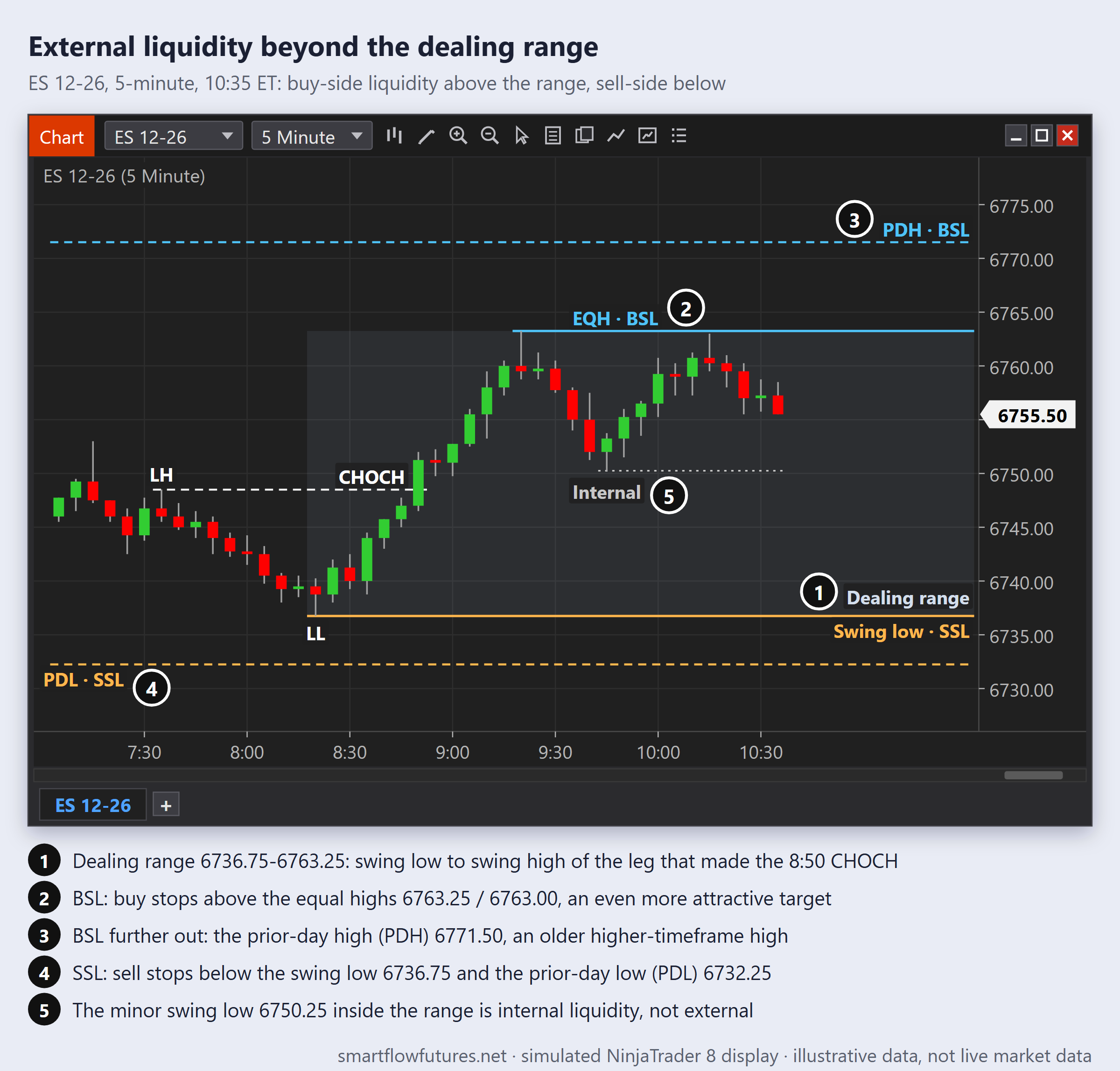
External liquidity refers to the liquidity resting outside the current price range (the dealing range, from the swing low to the swing high of the leg that made the most recent BOS or CHOCH): above the swing high and below the swing low that bound it, and beyond older higher-timeframe highs and lows. These are the obvious levels where traders have placed their stop losses, creating pools of resting orders that attract price.
Think of external liquidity as the targets on your chart. Price is drawn toward these pools because institutions need to access this liquidity to fill their positions. Until a liquidity pool is taken, it remains a magnet for price.
Buy-Side External Liquidity
Buy-side external liquidity (BSL) exists above the current price range:
Above Swing Highs: Short sellers place stops above the recent swing high that bounds the range, creating buy stops. These are the most common BSL pools.
Above Equal Highs: When price creates multiple highs at the same level, buy stops accumulate above, creating an even more attractive target.
Above Old Highs: Previous session highs, weekly highs, or monthly highs—all have buy stops resting above them.
When price takes BSL, the buying from triggered stops often creates the momentum for further upside—or provides liquidity for institutions to sell into.
Sell-Side External Liquidity
Sell-side external liquidity (SSL) exists below the current price range:
Below Swing Lows: Long traders place stops below the recent swing low that bounds the range, creating sell stops.
Below Equal Lows: Multiple lows at the same level concentrate sell stops below.
Below Old Lows: Previous session lows, weekly lows, monthly lows all attract stop placement.
When price takes SSL, the selling from triggered stops can fuel further downside—or provide liquidity for institutions to buy.
External Liquidity as Targets
One of the primary uses of external liquidity is target setting. If you enter a long trade, where should you take profit? Logical targets include the next pool of buy-side liquidity, since that’s where price is likely headed.
For Long Trades: Target the nearest untaken swing high, equal highs, or significant old high above your entry.
For Short Trades: Target the nearest untaken swing low, equal lows, or significant old low below your entry.
External Liquidity Sweeps
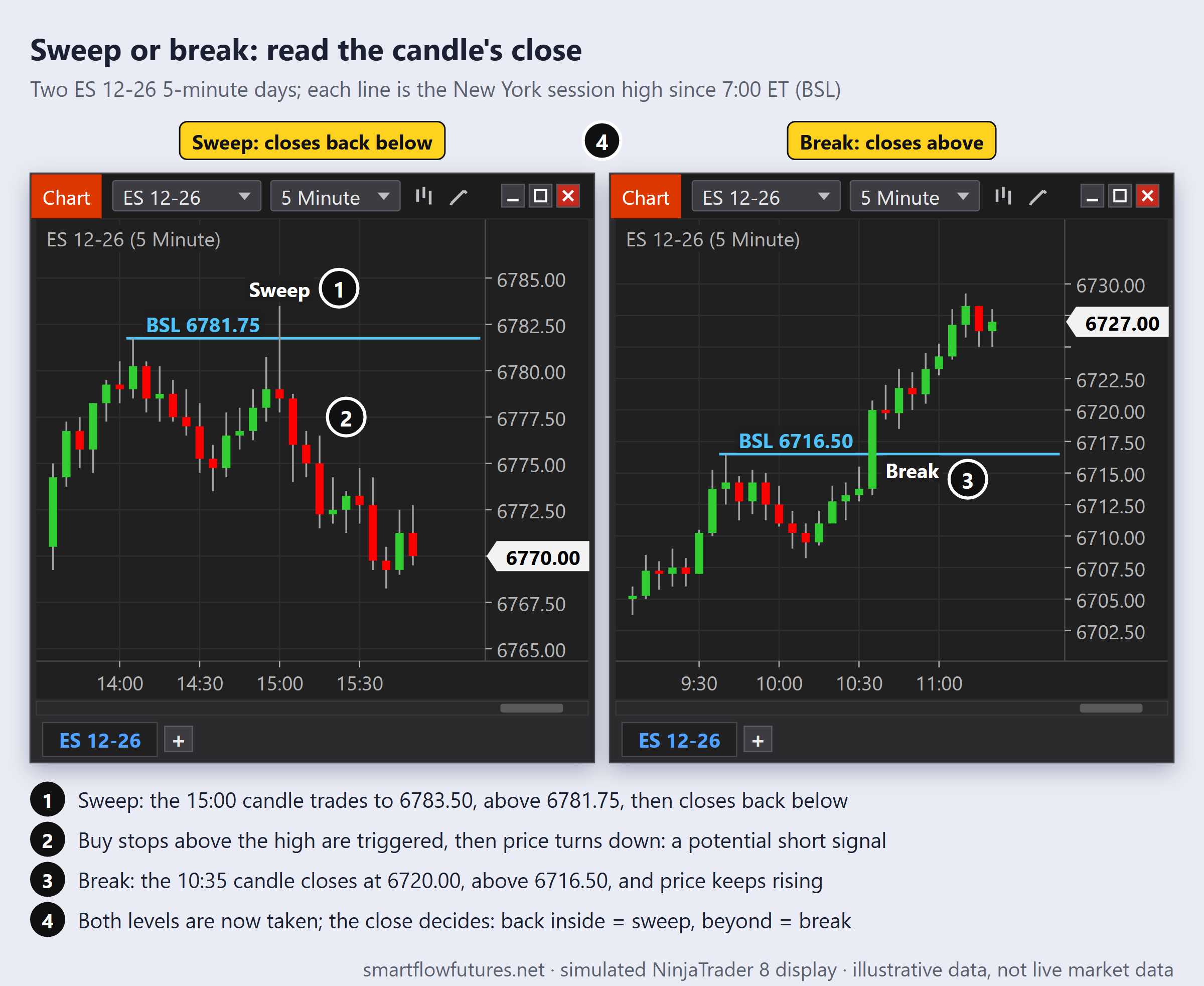
A liquidity sweep occurs when price trades beyond an external liquidity level, triggering the resting stops, and the candle closes back inside the level. A close beyond the level is a break, not a sweep. A sweep is a core SMC trading signal:
Sweep of BSL then Reversal: Price trades above a swing high, triggers buy stops (which smart money sells into), and the candle closes back below the high. This is a potential short entry signal.
Sweep of SSL then Reversal: Price trades below a swing low, triggers sell stops (which smart money buys), and the candle closes back above the low. This is a potential long entry signal.
Drawing External Liquidity on Charts
Make external liquidity visible on your charts:
Draw horizontal lines at the swing high and swing low that bound the current range, and at older highs and lows beyond them, labeling them BSL and SSL. Mark equal highs/lows with special notation, since they concentrate more stops than a single high or low. Note which levels have been taken (swept or broken) versus those still untaken.
Hierarchy of External Liquidity
Not all external liquidity is equal. Higher timeframe liquidity pools are more significant:
Monthly/Weekly Highs and Lows: Major liquidity pools that attract price over longer periods.
Daily Highs and Lows: Significant for intraday and swing traders.
Session Highs and Lows: Relevant for intraday trading within a specific session.
Recent Swing Points: The swing high and low that bound the current range on your trading timeframe are the most immediate targets. The minor swings inside the range are internal liquidity.
External Liquidity in Trade Planning
Incorporate external liquidity into your trade planning process:
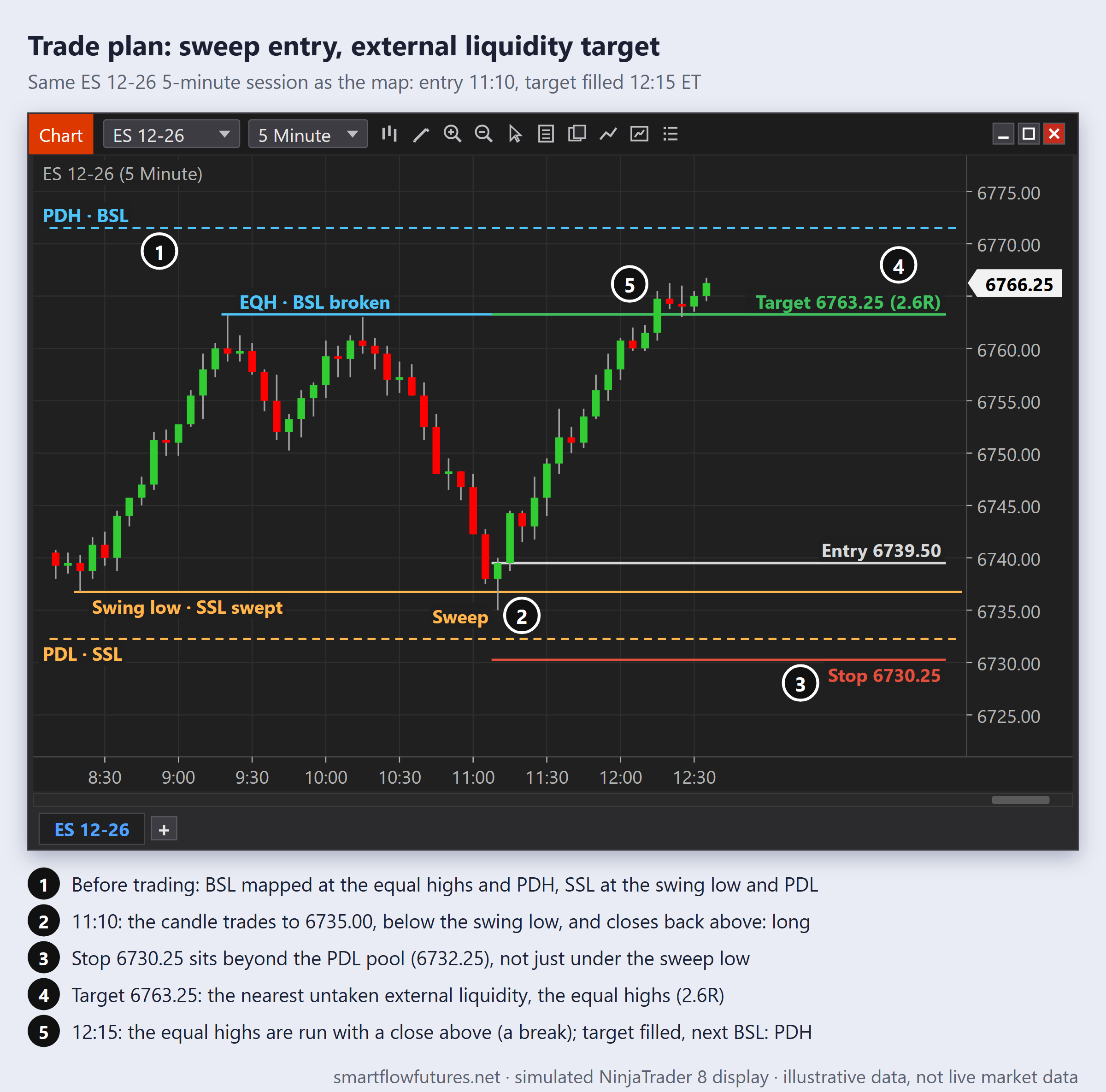
Before Trading: Map out the major external liquidity levels above and below current price. Ask: Where are the obvious stops?
Entry Selection: Look for entries after a liquidity pool is swept. Trapped breakout traders exiting add fuel to the move in your direction.
Target Setting: Use untaken external liquidity as your profit targets. These are the levels price is most often drawn to.
Stop Placement: Be aware of external liquidity near your stop. Consider placing stops beyond the next liquidity pool to avoid being swept before your trade works.
When External Liquidity Gets Run
Once external liquidity is taken, the level loses its magnetic quality. Price may retrace slightly but no longer has the same pull toward that level. Update your charts:
Mark the level as “taken” or remove it from focus. Identify the next external liquidity target. Note whether the candle closed back inside the level (a sweep) or closed beyond it and continued (a break).
Key Takeaways
External liquidity rests beyond the current range: BSL above highs, SSL below lows. These pools act as magnets for price. Use external liquidity as targets for your trades. A liquidity sweep (price trades beyond the level and the candle closes back inside) often precedes a reversal; watch for it as an entry signal. Higher timeframe liquidity pools carry more significance.