
Liquidity is the lifeblood of markets, and understanding where it pools is one of the most important concepts in Smart Money trading. In this article, we reveal how liquidity accumulates at obvious levels and how institutions use this knowledge to their advantage.
What is Liquidity?
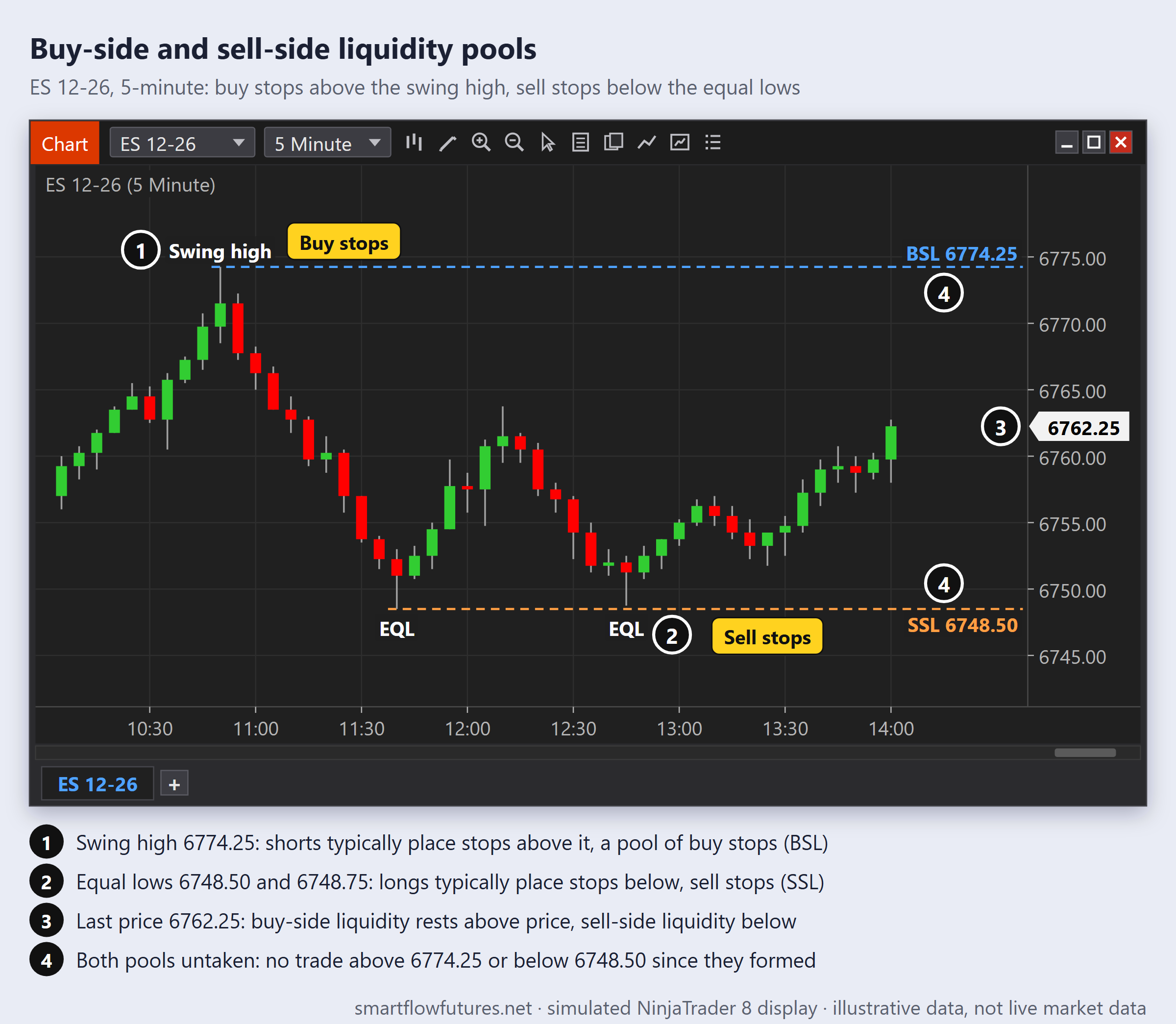
In trading terms, liquidity refers to resting orders in the market. These are the buy stops, sell stops, limit orders, and other pending orders that haven’t yet been executed. Where these orders cluster, we have liquidity pools.
For institutions needing to fill large positions, liquidity pools are essential. They can’t simply place a massive market order without moving price against themselves. Instead, they seek out liquidity pools where enough opposing orders exist to absorb their size.
Where Does Liquidity Pool?
Many retail traders place stops at the same obvious levels, creating liquidity pools that smart money can identify:
Above Swing Highs: Traders in short positions typically place their stop losses above recent highs. This creates pools of buy stops (orders that trigger buying when hit).
Below Swing Lows: Traders in long positions place stops below recent lows. This creates pools of sell stops (orders that trigger selling when hit).
Round Numbers: Psychological levels like 7,000 in ES or 25,000 in NQ attract both stops and limit orders.
Equal Highs/Lows: When price creates multiple touches at the same level, stops accumulate. These “equal highs” and “equal lows” become obvious liquidity targets.
Buy-Side vs. Sell-Side Liquidity
Buy-Side Liquidity (BSL): This rests above the current price, primarily consisting of buy stop orders from short sellers protecting their positions. When price runs into BSL, it triggers buying as these stops execute.
Sell-Side Liquidity (SSL): This rests below the current price, primarily consisting of sell stop orders from long traders. When price runs into SSL, it triggers selling as these stops execute.
How Institutions Use Liquidity
Here’s where it gets interesting. Institutions need liquidity to fill their orders. If they want to buy a large position, they need sellers, and they find them at sell-side liquidity pools, where all those sell stops are resting.
When price falls into SSL, the triggered sell stops become market sell orders. This selling provides the liquidity institutions need to accumulate their long positions. The retail trader getting stopped out is literally providing the other side of the institution’s trade.
The Stop Hunt Concept
This institutional behavior creates what retail traders call “stop hunts,” moves that seem designed specifically to trigger stop losses before reversing. Sometimes they are; often they are the by-product of large orders seeking liquidity.
Price spikes below a swing low, triggers the sell stops, the candle closes back above the low, and price rallies. Either way, the triggered stops supply the liquidity large orders need.
Identifying Liquidity Pools
To identify liquidity pools, look for:
Swing Points: Every swing high has buy stops above it. Every swing low has sell stops below it. The more obvious the swing point, the more liquidity.
Equal Levels: Multiple touches at the same price create concentrated liquidity. Double tops and double bottoms are prime examples.
Trendlines: Many traders place stops beyond trendlines, creating diagonal liquidity pools.
Session Highs/Lows: The previous day’s high and low, and the Asian session range, all attract stop placements.
Trading with Liquidity Awareness
Understanding liquidity changes how you trade:
Stop Placement: Knowing where liquidity pools form helps you avoid placing stops at obvious levels. Consider placing stops beyond the structure that invalidates the trade plus a buffer, not directly above/below obvious swings.
Target Selection: Untaken liquidity pools make natural targets. Price is drawn to them like a magnet because institutions need to access that liquidity.
Entry Timing: The best entries often come after a liquidity pool is swept. Wait for price to grab liquidity, then enter in the expected direction.
Liquidity Grabs as Entry Signals
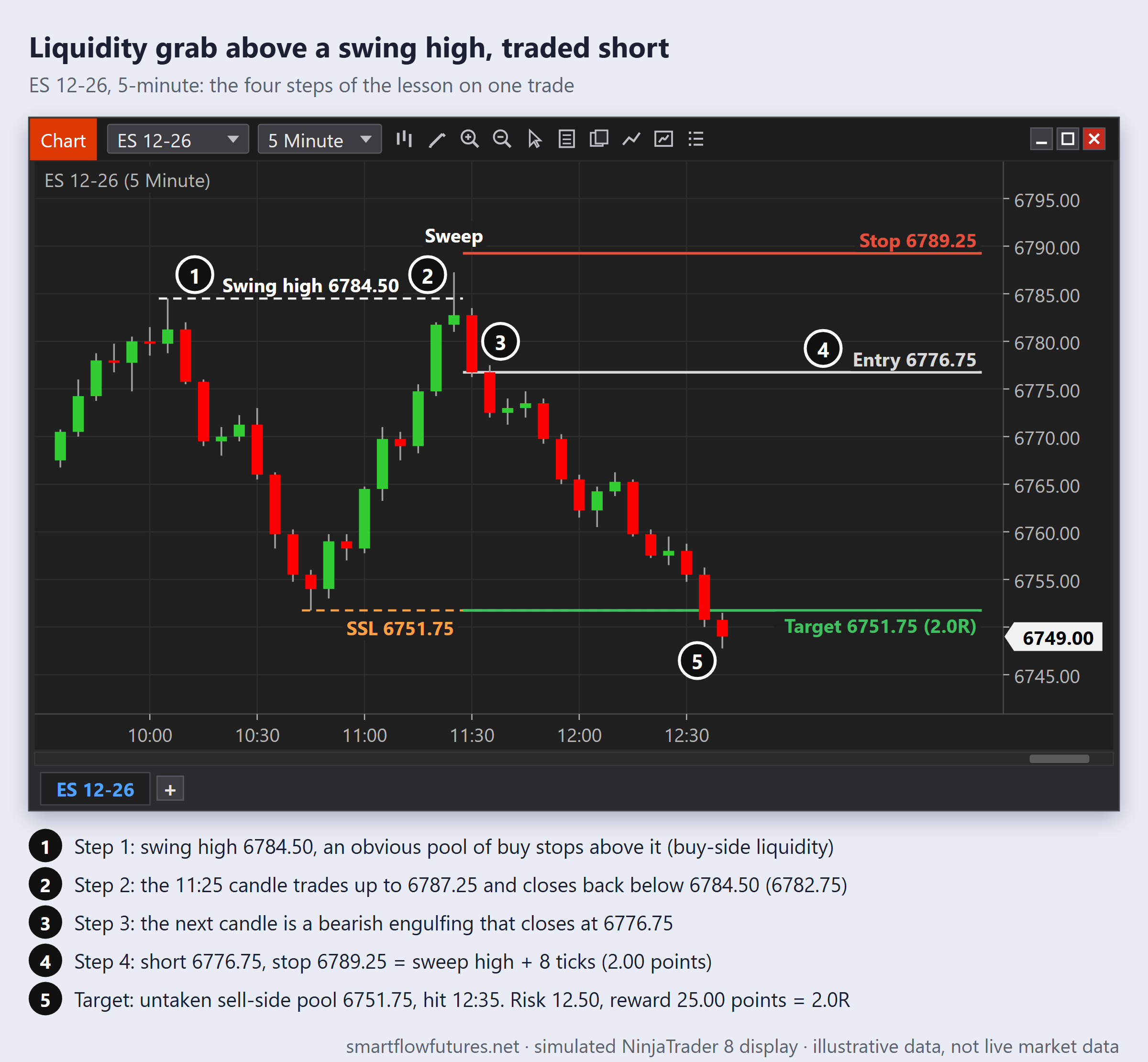
A core SMC setup is the liquidity grab followed by reversal:
Step 1: Identify an obvious liquidity pool (stops above a swing high, for example).
Step 2: Wait for price to sweep through the liquidity (trade above the swing high and close back below it).
Step 3: Look for immediate reversal signals, such as a bearish engulfing candle or a CHOCH on a lower timeframe.
Step 4: Enter in the direction of reversal with stops beyond the liquidity grab.
Stacked Liquidity
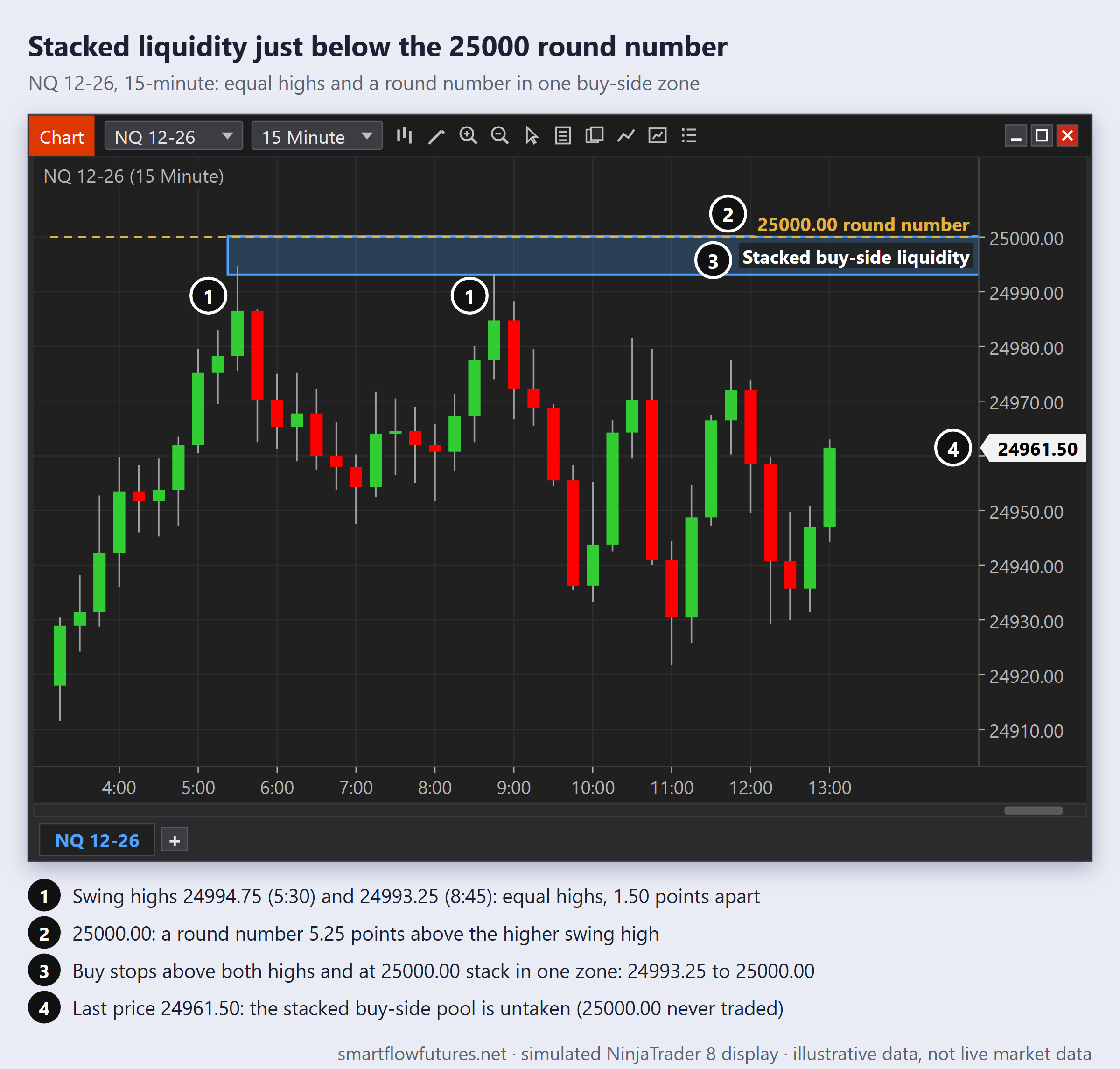
Sometimes liquidity stacks at multiple levels close together, such as several swing highs at similar prices, or a swing high just below a round number. These zones of stacked liquidity are particularly significant:
They’re more attractive to institutions, since there’s more liquidity to access in one place. They can produce stronger reversals: more stops mean more liquidity for a large opposite order, and more breakout traders trapped. And because they’re obvious on every timeframe, they get targeted more often.
Key Takeaways
Liquidity pools form where many retail traders place their stop losses at the same obvious levels. Buy-side liquidity rests above price (buy stops); sell-side liquidity rests below (sell stops). Institutions target liquidity pools to fill their large orders. Liquidity grabs often precede major moves: large orders have found their liquidity, and breakout traders are trapped. Use liquidity awareness for smarter stop placement, better targets, and entry timing.