
Algorithmic trading (using computer programs to make trading decisions) now accounts for a massive portion of market activity. As a retail trader, you are competing and coexisting with these systems. Understanding them helps you adapt your approach.
What is Algorithmic Trading?
Algorithmic trading uses computer programs to execute trading strategies. These programs can analyze market data, make decisions, and place orders far faster than humans.
Types of Algorithmic Trading:
Execution algorithms: Execute large orders efficiently (TWAP, VWAP). Market making algorithms: Provide liquidity and capture spreads. Arbitrage algorithms: Exploit price differences between related instruments. Statistical algorithms: Trade based on quantitative models and patterns. High-frequency trading: Ultra-fast strategies operating in microseconds.
The Scale of Algorithmic Trading
Estimates vary, but algorithmic trading represents a substantial majority of volume in most liquid markets:
In US equities, perhaps 60-70% of volume. In futures markets, similarly high percentages. In forex, even higher. These are rough estimates.
Most of the order flow you see is generated by algorithms, not humans clicking buttons.
What Algorithms Do Well
Speed: Algorithms react in milliseconds. They can process information and act before humans even perceive the change.
Consistency: Algorithms never get tired, emotional, or distracted. They execute their rules exactly, every time.
Scalability: One algorithm can monitor dozens of markets simultaneously. Humans cannot.
Pattern Recognition: Algorithms can identify and exploit statistical patterns across massive datasets.
What Algorithms Do Poorly
Novel Situations: Algorithms are programmed for expected scenarios. Truly novel events can cause unexpected behavior.
Context Understanding: Algorithms may not understand why something is happening. They react to data, not meaning.
Adaptation: While machine learning improves this, many algorithms struggle when market conditions change fundamentally.
Judgment: Algorithms cannot make judgment calls about uncertain situations the way experienced humans can.
How Algorithms Affect Markets
Increased Efficiency: Algorithms arbitrage away obvious inefficiencies quickly. Simple patterns that worked in the past may no longer work.
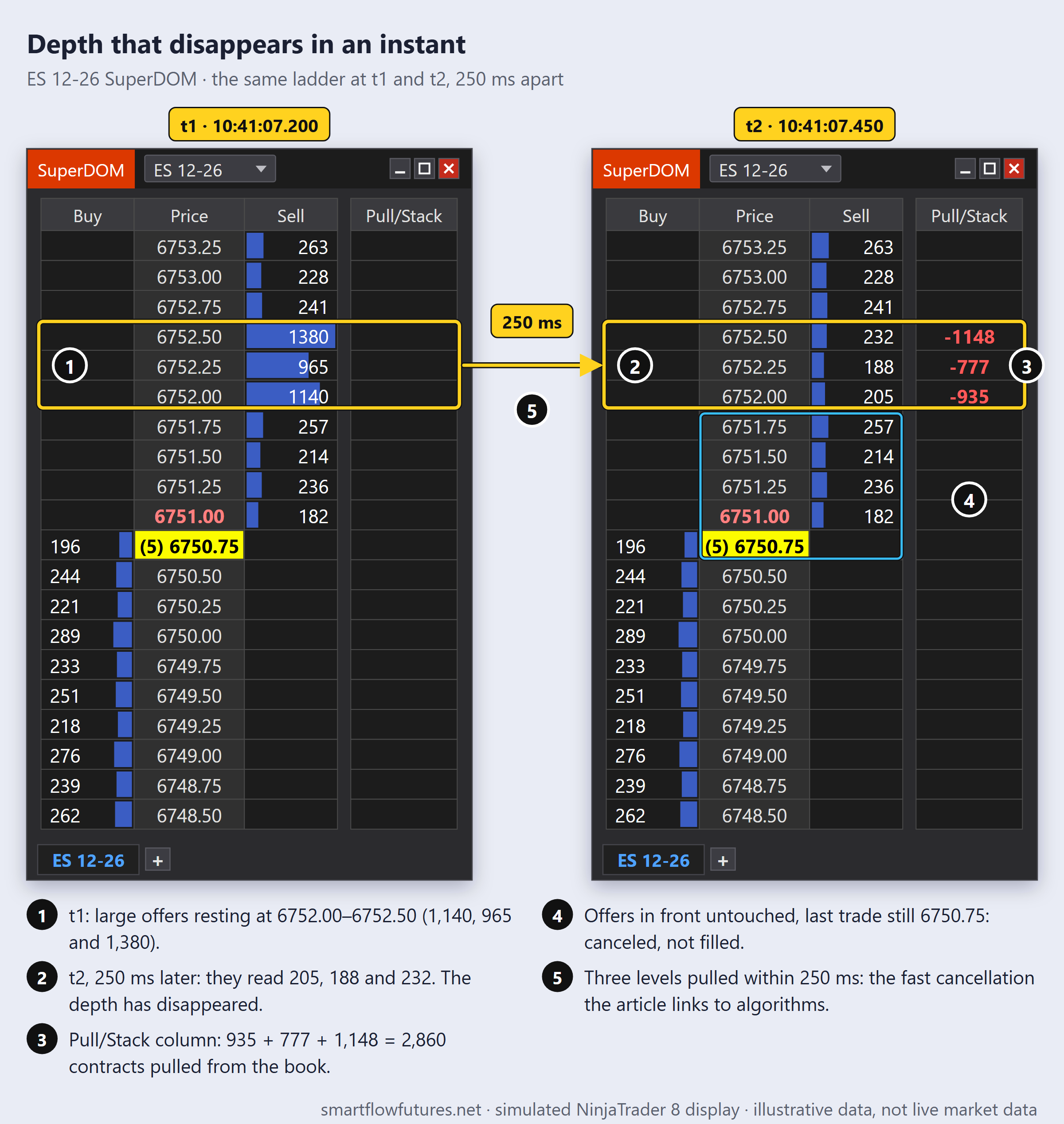
Changed Microstructure: Order book dynamics differ with algorithmic participation. Orders are placed and canceled much faster. Depth can disappear instantly.
Increased Correlation: Many algorithms trade similar signals. This can create herding behavior and sudden correlated moves.
Flash Events: Algorithmic interactions can cause rapid price dislocations. “Flash crashes” are often algorithmic in nature.
Competing Against Algorithms
You cannot beat algorithms at their own game:
Do Not Try to Be Faster: You will lose any speed competition. Do not trade strategies that require millisecond execution.
Do Not Trade Obvious Patterns: Simple technical patterns are algorithmic arbitrage targets. If a pattern is easily programmable, assume algorithms exploit it.
Avoid Thin Markets: Algorithmic behavior in thin markets can be erratic. Wider spreads and sudden moves hurt retail traders disproportionately.
Where Retail Traders Have Advantages
Timeframe: Algorithms often focus on short-term patterns. Longer-term analysis may be less crowded.
Complexity: Strategies that require judgment, context, and pattern recognition across multiple factors are harder to automate.
Flexibility: You can change your approach instantly. Algorithms require programming changes and testing.
Size: Small size means minimal market impact. You can usually enter and exit without moving price, though market orders still pay the spread and can slip in thin or fast markets.
Coexisting with Algorithms
Rather than competing, consider how to coexist:
Use Liquidity They Provide: Market making algorithms provide the liquidity you use. Tighter spreads benefit retail traders.
Trade Around Algorithmic Events: Predictable algorithmic activity (like VWAP execution) creates patterns you can observe. Understanding their behavior helps you interpret order flow.
Focus on What Matters: Algorithms are tools for execution and pattern exploitation. Underlying value and major directional moves still come from human decisions at institutions.
Algorithmic Signatures in Order Flow
You can sometimes identify algorithmic activity:
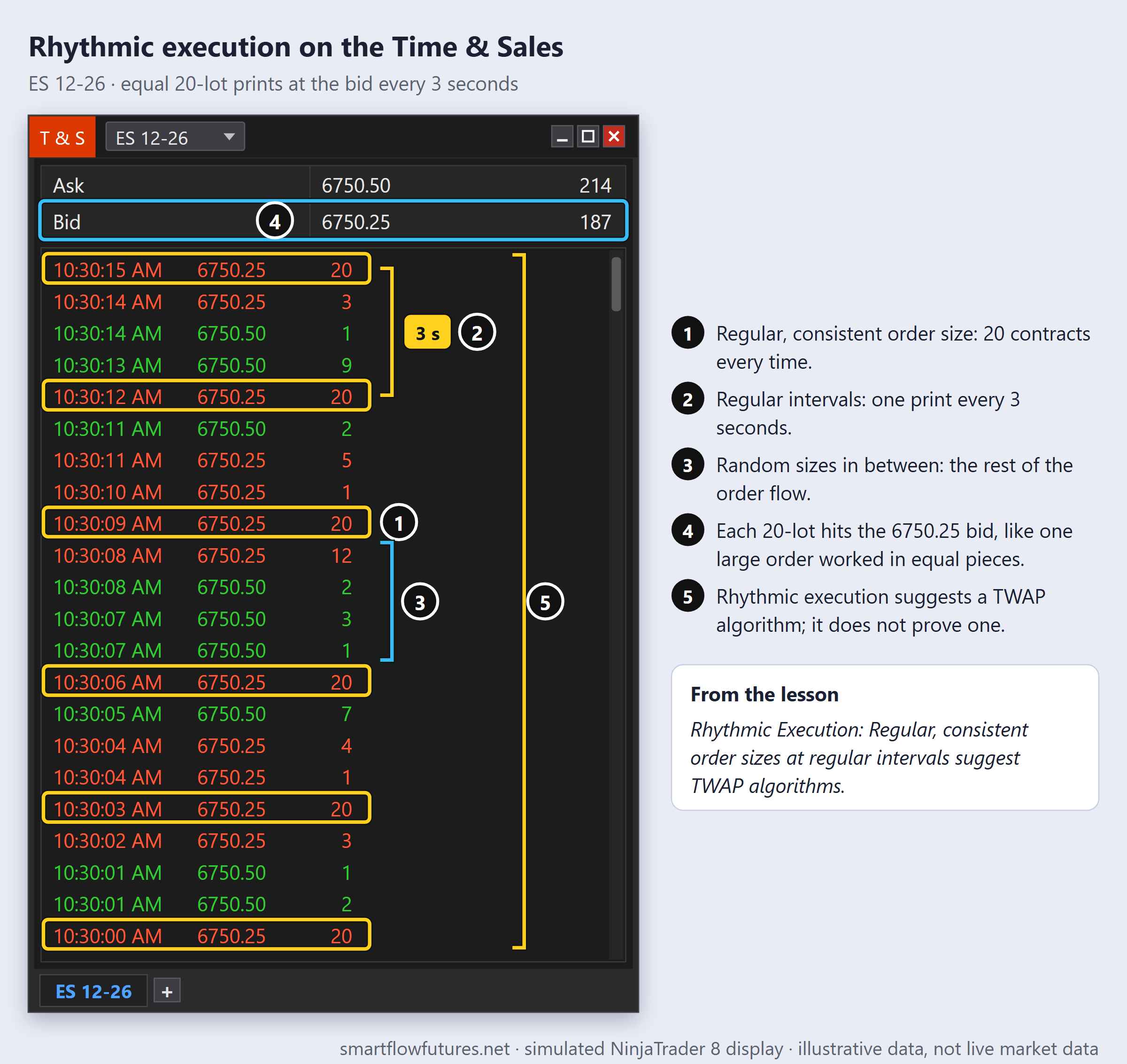
Rhythmic Execution: Regular, consistent order sizes at regular intervals suggest TWAP algorithms.
Volume-Following: Order flow that tracks live market volume suggests participation-rate (POV) algorithms. VWAP algorithms look similar but follow an expected, usually historical, intraday volume curve.
Rapid Order Placement/Cancellation: Orders that appear and disappear quickly suggest market making algorithms. Spoofing (placing orders with the intent to cancel them before execution) is illegal, and intent cannot be read from the order book.
Correlated Activity: Identical activity across related instruments suggests arbitrage algorithms.
Key Takeaways
Algorithmic trading dominates modern market volume. Algorithms excel at speed, consistency, and pattern exploitation. They struggle with novel situations and contextual judgment. Retail traders cannot compete on speed or simple patterns. Focus on longer timeframes, complex analysis, and flexibility. Coexist with algorithms and use the liquidity they provide. Understanding algorithmic behavior helps interpret Order Flow.