
High-frequency trading (HFT) represents the extreme end of algorithmic trading—strategies that operate in microseconds, where success depends on being faster than everyone else. Understanding HFT helps you interpret market behavior and set realistic expectations.
What is High-Frequency Trading?
High-frequency trading uses ultra-fast computer systems to execute large numbers of trades in tiny fractions of a second. Speed is the primary competitive advantage.
Defining Characteristics:
Holding periods measured in milliseconds to seconds. Very high number of trades per day. Low profit per trade, but high volume. Technology infrastructure focused on minimizing latency.
HFT Infrastructure
HFT firms invest heavily in technology:
Colocation: Placing servers physically next to exchange servers. Reduces transmission time to microseconds. Firms pay premium fees for closest placement.
Low-Latency Networks: Specialized network connections between exchanges. Microwave and laser links for fastest possible transmission. Even small distance advantages matter.
Hardware Optimization: Custom-designed computer hardware. FPGAs (field-programmable gate arrays) for fastest processing. Every component optimized for speed.
Common HFT Strategies
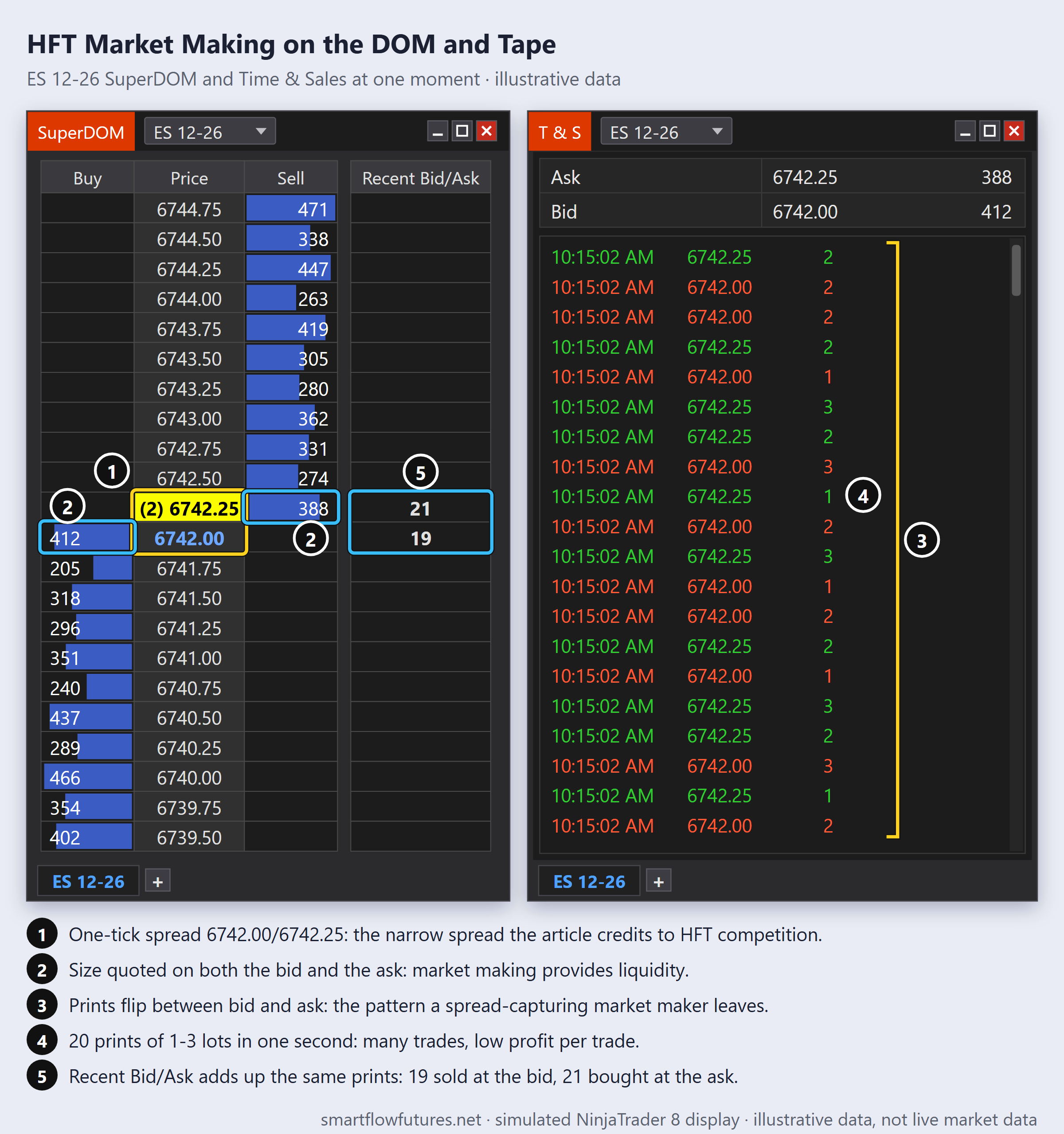
Market Making: Providing liquidity by quoting both bid and ask. Capturing the spread thousands of times per day. Adjusting quotes faster than other participants can react.
Statistical Arbitrage: Exploiting tiny price differences between related instruments. Prices between ES futures and SPY ETF, for example. Differences exist for milliseconds—HFT captures them.
Latency Arbitrage: Acting on price information before others receive it. If price moves on one exchange, HFT buys or sells on another before the news arrives. Controversial and sometimes called “front-running.”
Order Flow Prediction: Detecting large orders being executed and trading ahead. Identifying TWAP or VWAP patterns and anticipating next slices. Legal gray area depending on methods.
HFT Market Impact
Positive Effects:
HFT competition narrows bid-ask spreads. Price discovery is more efficient, since information gets incorporated into prices faster. Liquidity is higher too, with more buyers and sellers willing to trade.
Negative Effects:
Phantom liquidity is a real risk: orders can disappear just as you try to hit them. HFT interactions can also amplify flash crashes (sudden and severe dislocations in price), for example when quotes are pulled as a large order hits the market. The speed race consumes resources that could otherwise go toward fundamental analysis, and speed advantages can put slower participants at a disadvantage.
HFT and the Order Book
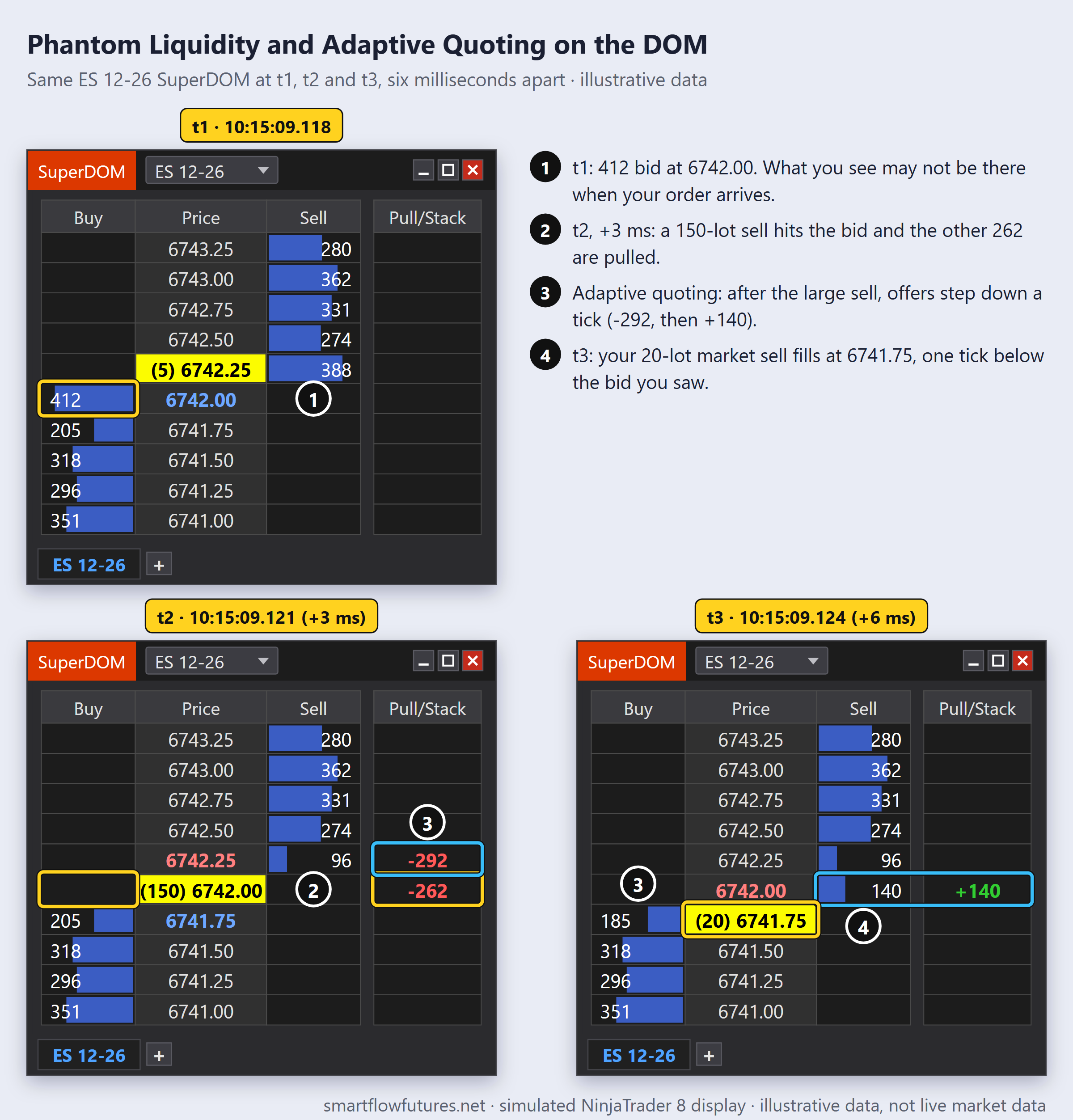
HFT affects what you see on the DOM:
Rapid Changes: Orders appear and disappear in milliseconds. What you see may not be there when your order arrives.
Quote Stuffing: Some HFT involves placing and canceling large numbers of orders. This can create noise in order book data. Illegal when done to manipulate, but hard to prove intent.
Adaptive Quoting: HFT market makers adjust quotes based on order flow. Large aggressive order detected triggers quote adjustment before your order fills.
Can Retail Traders Compete with HFT?
The short answer is no, not on their terms. But you do not need to:
Different Games: HFT profits from speed and volume on tiny edges. Retail traders profit from analysis and patience on larger edges. You are not competing directly.
Where HFT Does Not Reach: Longer timeframes (minutes to hours, days to weeks). Complex analysis requiring judgment. Situations where size matters more than speed.
Benefit from HFT: Tighter spreads reduce your transaction costs. Higher liquidity improves your execution. HFT provides the market infrastructure you use.
HFT and Order Flow Trading
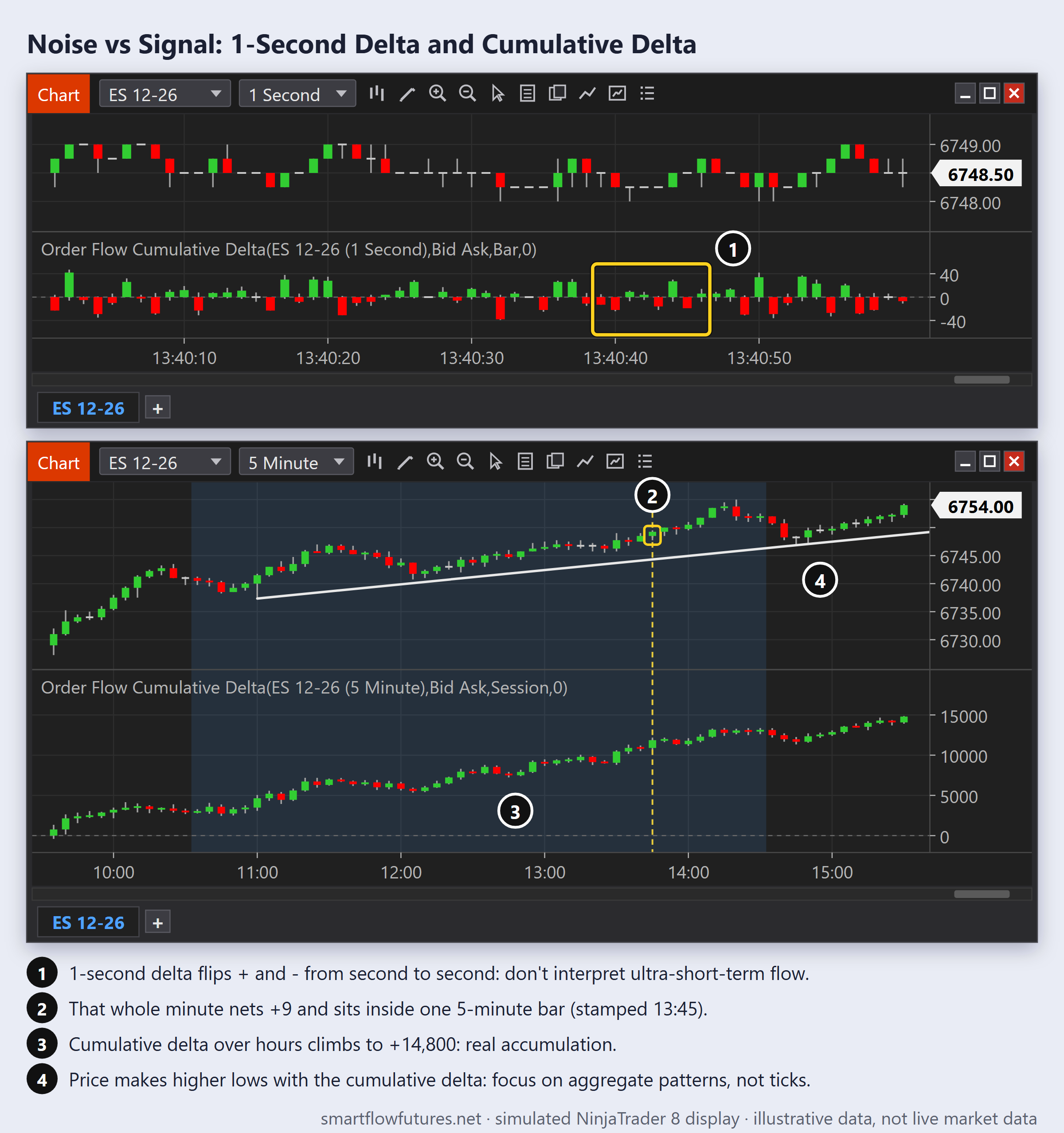
For Order Flow traders, HFT creates noise but also signal:
Noise: Very short-term order flow is dominated by HFT. Millisecond patterns are HFT trading with each other. Do not try to interpret ultra-short-term flow, such as tick-by-tick or second-by-second delta.
Signal: Net positioning over longer periods still reflects fundamental flows. Cumulative delta over minutes and hours shows real accumulation or distribution. Focus on aggregate patterns, not individual ticks.
Protecting Yourself from HFT
Use Limit Orders: Market orders pay the spread and can fill at a worse price when the quotes you saw disappear before your order arrives. Limit orders let you control your execution price, but they may not fill, and resting orders are the ones most exposed to adverse selection.
Avoid Thin Markets: HFT behavior in thin markets can be erratic. Trade during liquid sessions.
Ignore Millisecond Noise: Do not react to ultra-fast order book changes. Focus on meaningful timeframes for your strategy.
Key Takeaways
HFT operates in microseconds with massive infrastructure investment. Strategies include market making, statistical arbitrage, and latency arbitrage. HFT provides tighter spreads and more liquidity but creates noise. Retail traders cannot and should not try to compete with HFT on speed. Focus on longer timeframes where HFT does not have advantages. Use limit orders and avoid thin markets to minimize HFT impact.