
When to Break Rules: Discretionary Trading
Learn when experienced traders deviate from their rules and how to develop sound trading discretion without losing discipline.
Throughout this course, we have emphasized following rules and trading systematically. Yet if you watch professional traders, they sometimes deviate from their standard approach. This is not random rule-breaking but informed discretion developed through experience. This article explains the difference between destructive rule-breaking and constructive discretion, and how to develop this skill without undermining your discipline.
The Rules Paradox
Why Rules Matter
Rules protect you from emotional decisions, create consistency, allow for performance measurement, and build the discipline required for long-term success. Without rules, most traders make impulsive decisions that destroy their accounts.
Why Pure Rules Are Not Enough
Markets are dynamic and context-dependent. A setup that works perfectly in trending conditions may fail in ranging markets. News events change everything. No rule set can anticipate every situation. Experienced traders recognize when context requires adaptation.
Develop discretion that enhances your rules rather than replaces them. Think of it as having a solid foundation (rules) with the flexibility to adapt when clear evidence suggests adaptation is warranted.
Destructive vs Constructive Discretion
Destructive (Avoid)
- Breaking rules based on feelings
- Deviating after losses to recover
- Skipping stops because you hope
- Taking random trades on hunches
- Increasing size without plan
- Trading outside your hours
Constructive (Develop)
- Reducing size when conditions are poor
- Passing on valid setups before news
- Exiting early on clear warning signs
- Adjusting targets to structure
- Recognizing exceptional opportunities
- Adapting to unusual market behavior
When Discretion is Valid
Situation 1
Situation 2
Situation 3
Situation 4
Situation 5
How to Develop Sound Discretion
Trade your system mechanically for at least 100 trades before considering discretionary adjustments. You must understand how your rules perform before you can improve them.
When you notice situations where discretion might help, write them down. Do not act on them yet. Just observe and record patterns over time.
Turn your observations into specific guidelines. “I may reduce position size by 50% when VIX is above 30” is a guideline. “I will trade smaller when I feel nervous” is not.
Apply your discretionary guidelines with reduced position size initially. Track results separately from your mechanical trades to measure impact.
Regularly review your discretionary decisions. Did they improve results? Were they based on valid reasoning? Refine your guidelines based on actual outcomes.
The Discretion Test
Before deviating from your rules, ask yourself these questions:
Valid Discretion Checklist
- Can I articulate a specific reason?
- Is this based on market evidence, not emotion?
- Would I make this decision in backtesting?
- Am I in a calm mental state?
- Is this protecting capital rather than increasing risk?
- Will I document this decision fully?
If you cannot clearly answer yes to all these questions, follow your rules mechanically. Discretion that fails this test is usually emotional trading in disguise.
Real Examples
Good Discretion Example
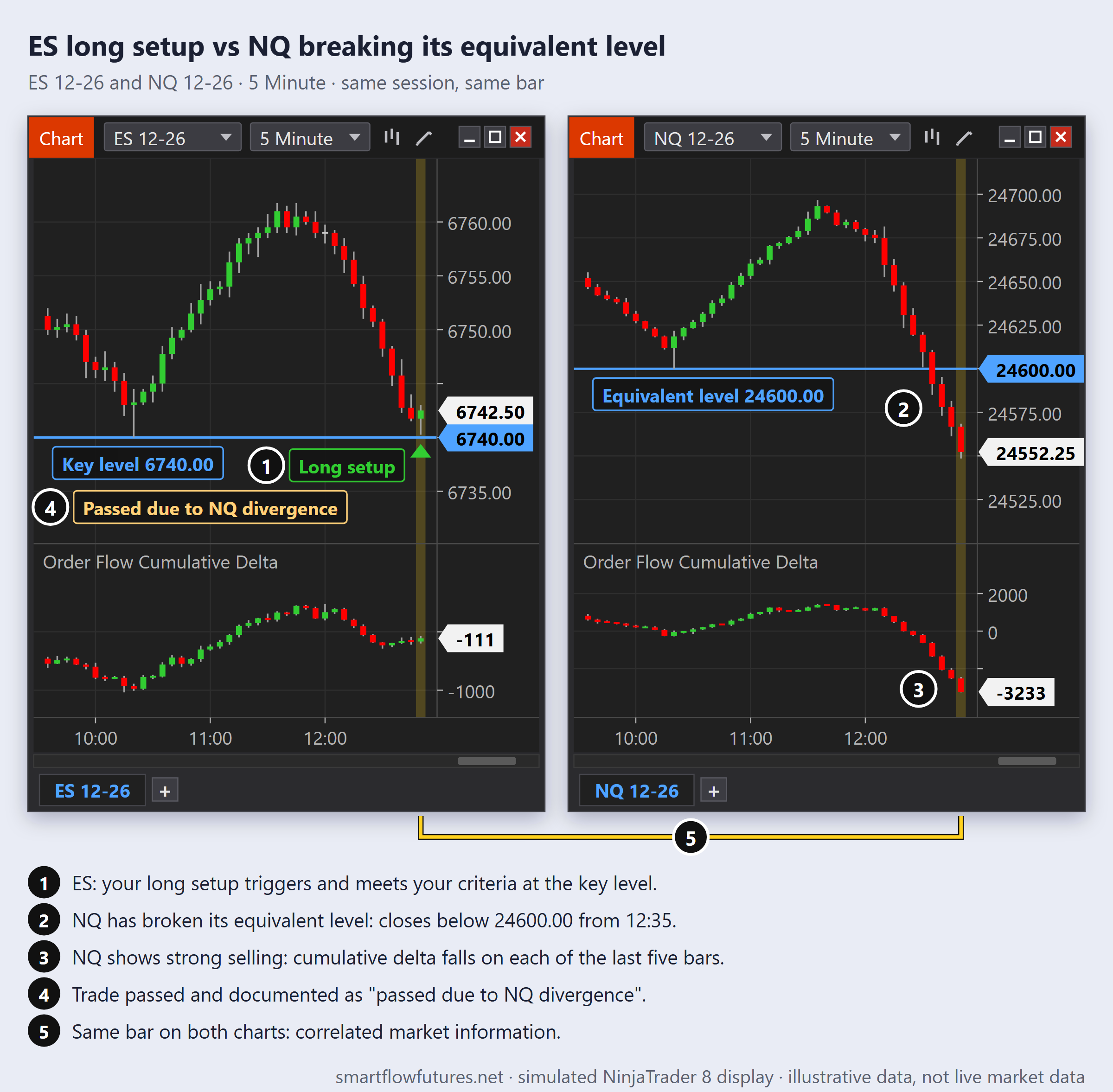
Your setup triggers long on ES, but you notice NQ has broken its equivalent level and is showing strong selling. You decide to pass on this trade despite it meeting your criteria. Reason: Correlated market information suggests the ES setup may fail. This is documented as “passed due to NQ divergence.”
Bad Discretion Example
Your setup triggers long on ES, but you just had two losses and feel uncertain. You decide to pass on this trade. Reason: You feel bad. This is emotional trading, not discretion. Your system said take the trade. You should have taken it.
Good Discretion Example
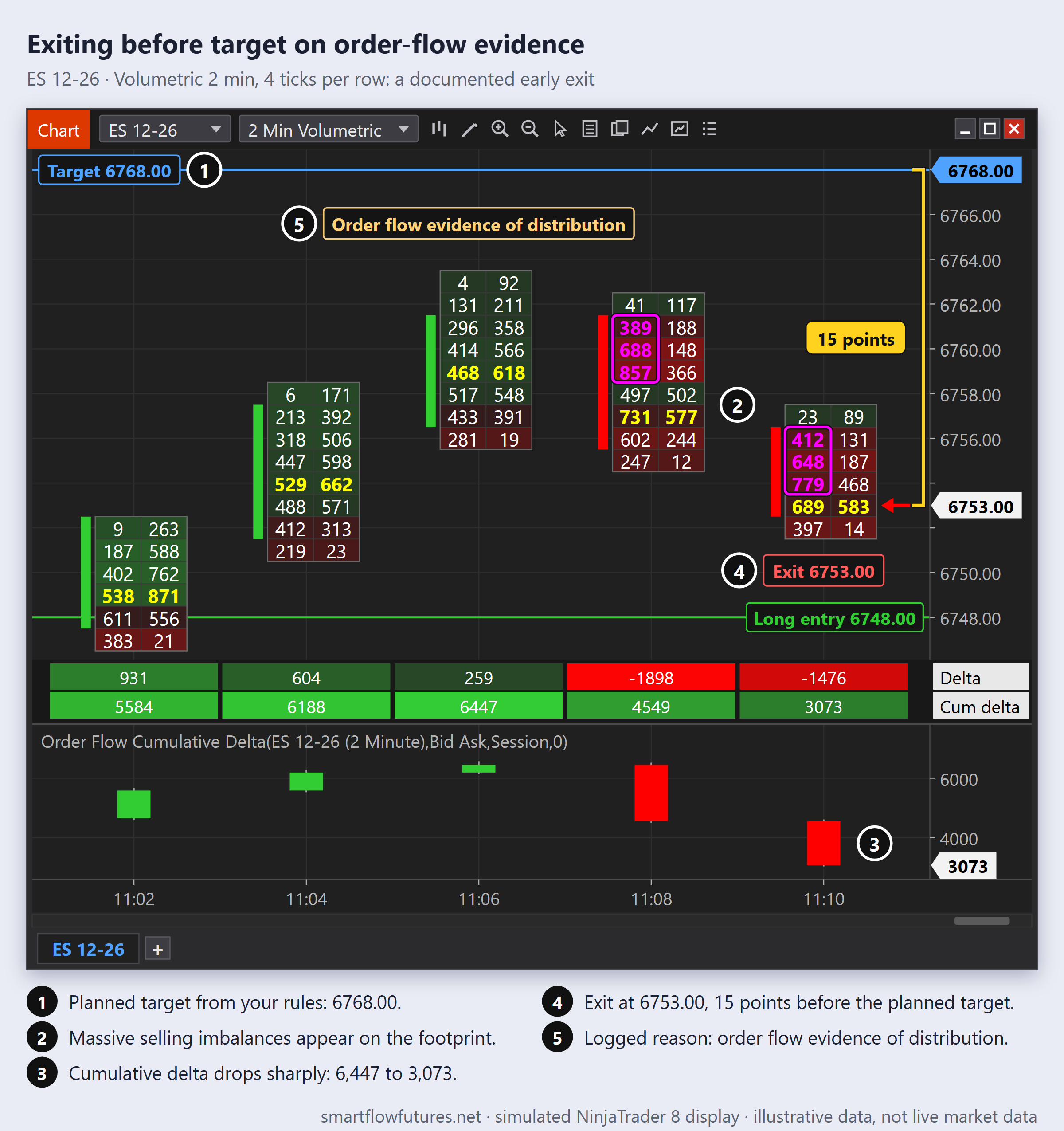
You are in a long trade approaching your target, but you see massive selling imbalances appear on the footprint and cumulative delta dropping sharply. You exit 15 points before your planned target. Reason: Order flow evidence of distribution. Trade documented with screenshots.
Discretion is a skill that develops after mastering mechanical trading. Valid discretion protects capital, adapts to unusual conditions, and is based on market evidence rather than emotion. Always ask if you can articulate a specific, logical reason for the deviation. Document all discretionary decisions and review their outcomes. Remember: most traders need more discipline, not more discretion. When in doubt, follow your rules.