
Spoofing and layering are illegal market manipulation tactics where traders place orders they intend to cancel before execution. These fake orders create misleading signals that can deceive other traders. Understanding these practices helps you avoid being fooled.
What is Spoofing?
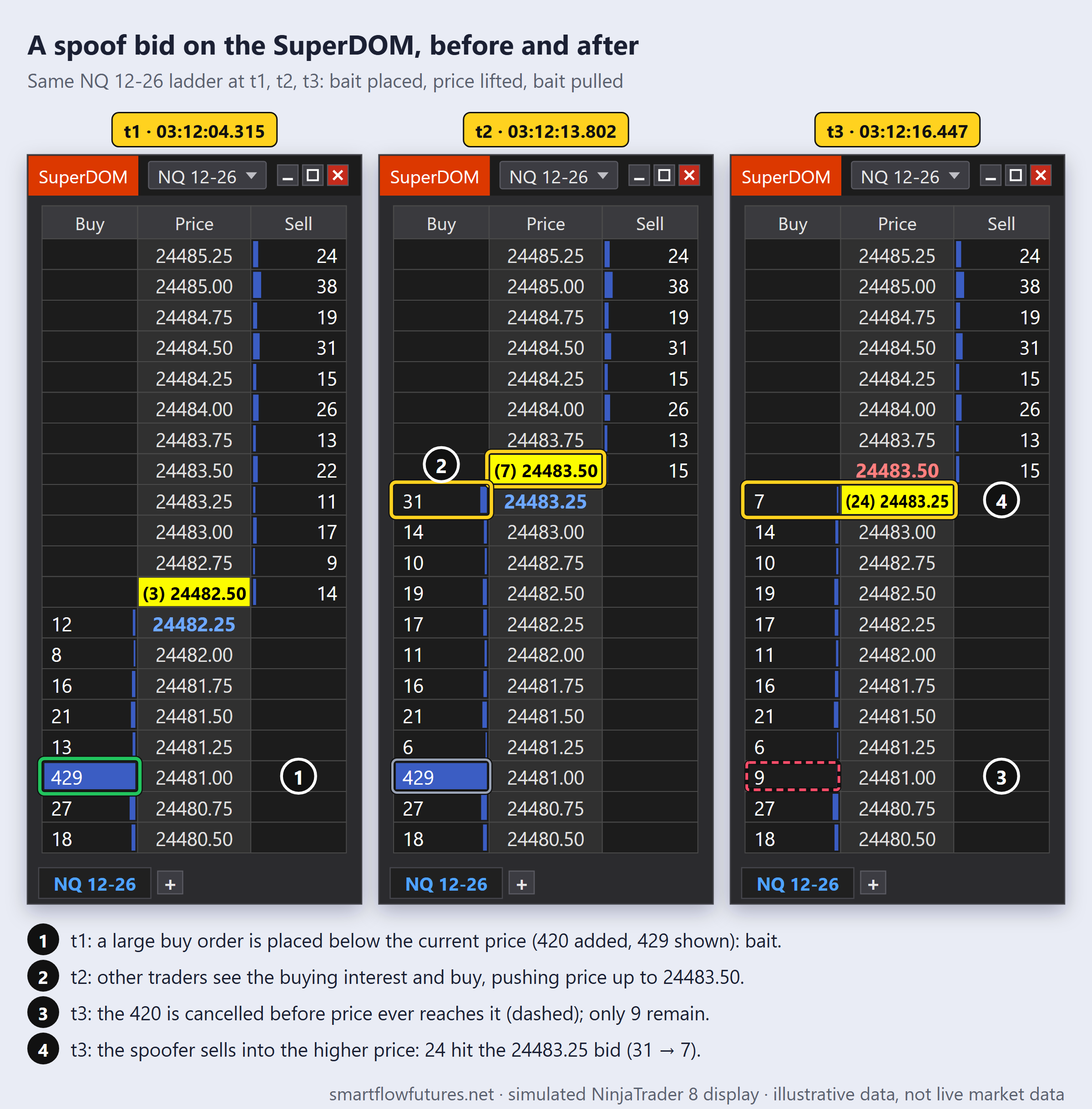
Spoofing involves placing large orders with the intent to cancel them before execution:
The Pattern: A trader places a large buy order below the current price. This creates the appearance of strong buying interest. Other traders see this and buy, pushing price up. The spoofer cancels the original buy order and sells into the higher price.
The spoofer never intended to execute the original order. It was bait to influence other traders.
What is Layering?
Layering is a more sophisticated form of spoofing:
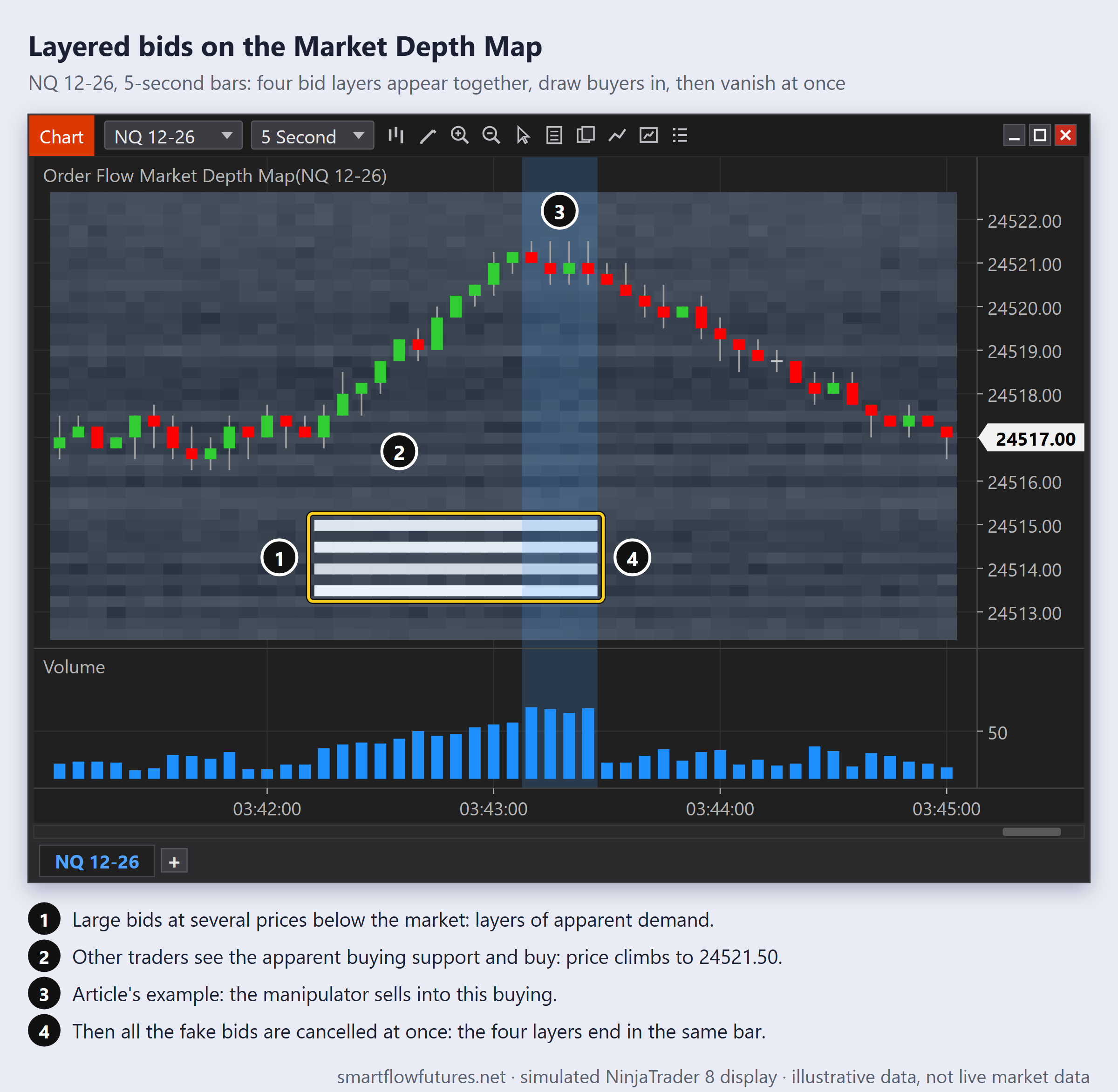
The Pattern: Multiple orders are placed at various prices, creating “layers” of apparent demand or supply. These layers create a wall of orders that appears to support price in one direction. Other traders react to this apparent demand or supply. The manipulator executes their real trade on the other side, then cancels all the layered orders.
Example: A manipulator wants to sell. They place large bids at multiple prices below the market. Other traders see the apparent buying support and buy. The manipulator sells into this buying. Then cancels all the fake bids.
Why This is Illegal
Spoofing and layering are prohibited because they:
Create false impressions of supply and demand. Deceive other market participants. Undermine market integrity. Distort price discovery.
Regulators like the CFTC and SEC actively prosecute spoofing. Penalties include large fines and criminal charges. Several high-profile traders have been imprisoned for spoofing.
Recognizing Spoofing Patterns
Characteristics of Fake Orders:
Large size relative to normal order flow. Placed away from the current price (not immediately executable). Quickly canceled before price reaches them. Often appear and disappear repeatedly.
Red Flags on the DOM:
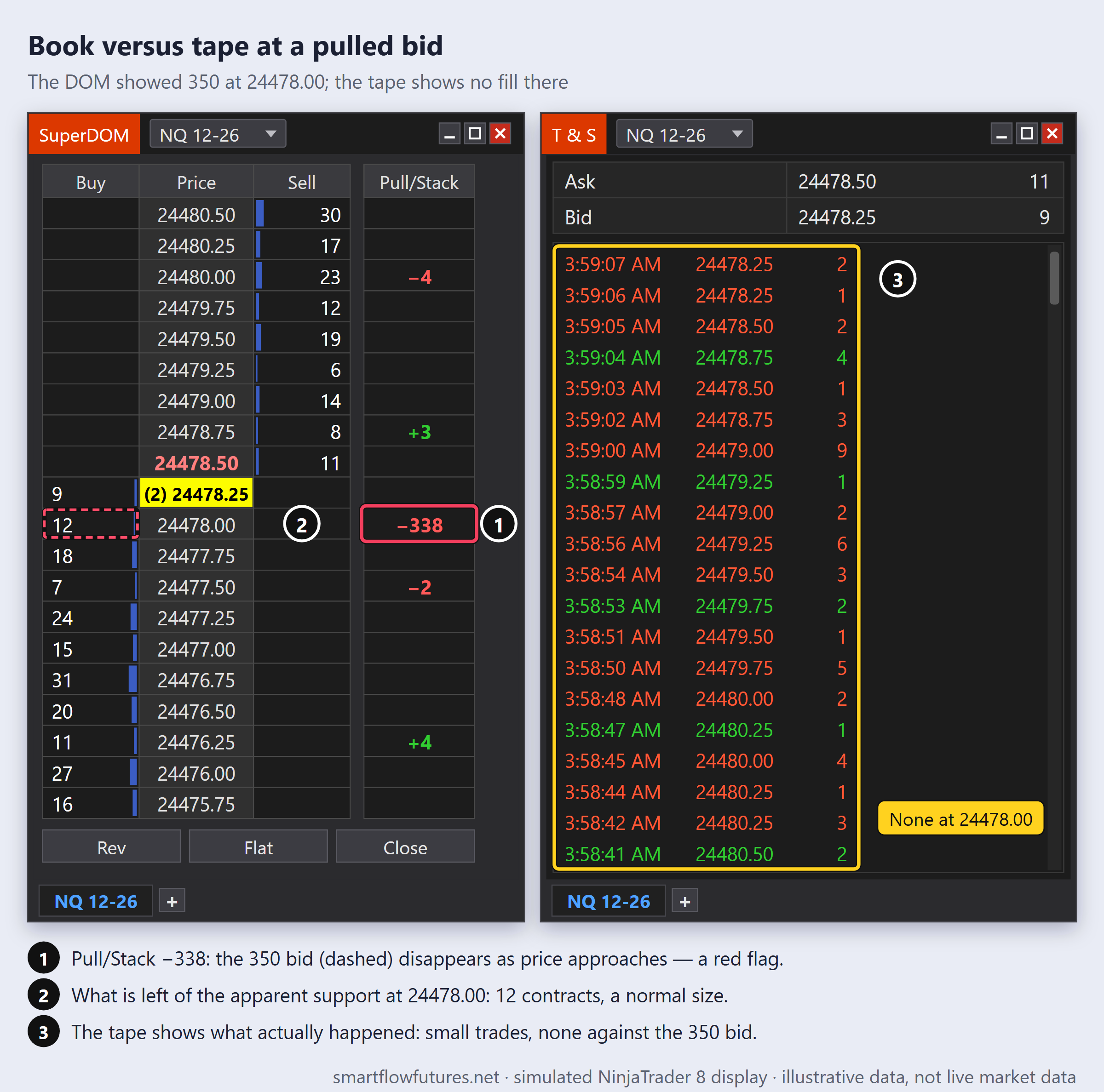
Large orders that consistently disappear when price approaches. Orders that flash in and out rapidly. Size that seems disproportionate to normal activity. Orders that appear strategically timed around other activity.
Distinguishing Spoofing from Legitimate Activity
Not every canceled order is spoofing. Legitimate reasons for cancellation include:
Market conditions changed. The trader no longer wants to execute. The order was placed incorrectly. Strategy parameters updated.
Key Distinction: Legitimate traders generally intend to execute their orders. Spoofers place orders specifically to create false signals, not to trade.
Patterns Suggesting Manipulation:
Consistent pattern of large orders appearing and disappearing. Orders always canceled before execution. Pattern benefits the trader placing them (they trade opposite their visible orders). Timing suggests coordination with actual executions on the other side.
Protecting Yourself
Do Not React to Book Alone: Large orders on the book may be fake. Wait for price action confirmation before trading based on visible orders.
Watch for Execution: Real interest gets filled. If large orders consistently disappear without filling, be suspicious.
Focus on Actual Trades: The tape shows what actually happened, not what might happen. Trades are real; orders might be fake.
Use Multiple Confirmations: Never trade based solely on order book appearance. Require price action, Order Flow, and context alignment.
Spoofing in Context
When Spoofing is More Likely:
Thinner markets with less liquidity. Around key technical levels where traders watch order books. During times when retail trader attention is high.
When Spoofing is Less Likely:
Very liquid markets like ES during NY session. Large orders that actually fill. Orders that stay for extended periods.
Reporting Suspected Manipulation
If you consistently observe patterns suggesting manipulation:
Document what you observe with timestamps. Report to the exchange or relevant regulator (CFTC for futures). Regulators have sophisticated tools to detect spoofing patterns.
Do not expect immediate action. Investigations take time. But reporting contributes to market integrity.
Key Takeaways
Spoofing places fake orders to create false impressions and deceive traders. Layering uses multiple fake orders to build apparent support or resistance. Both are illegal and actively prosecuted. Red flags include large orders that consistently disappear before execution. Protect yourself by not reacting to order book alone. Wait for actual execution. Focus on the tape (real trades) rather than the book (potential trades). Report suspected manipulation to regulators.