
Liquidity grabs are a core SMC setup. When price sweeps a liquidity pool (taking out the stops, then closing back inside the level), it often reverses immediately. The Liquidity Grab entry model captures this reversal with precise timing and a tight stop.
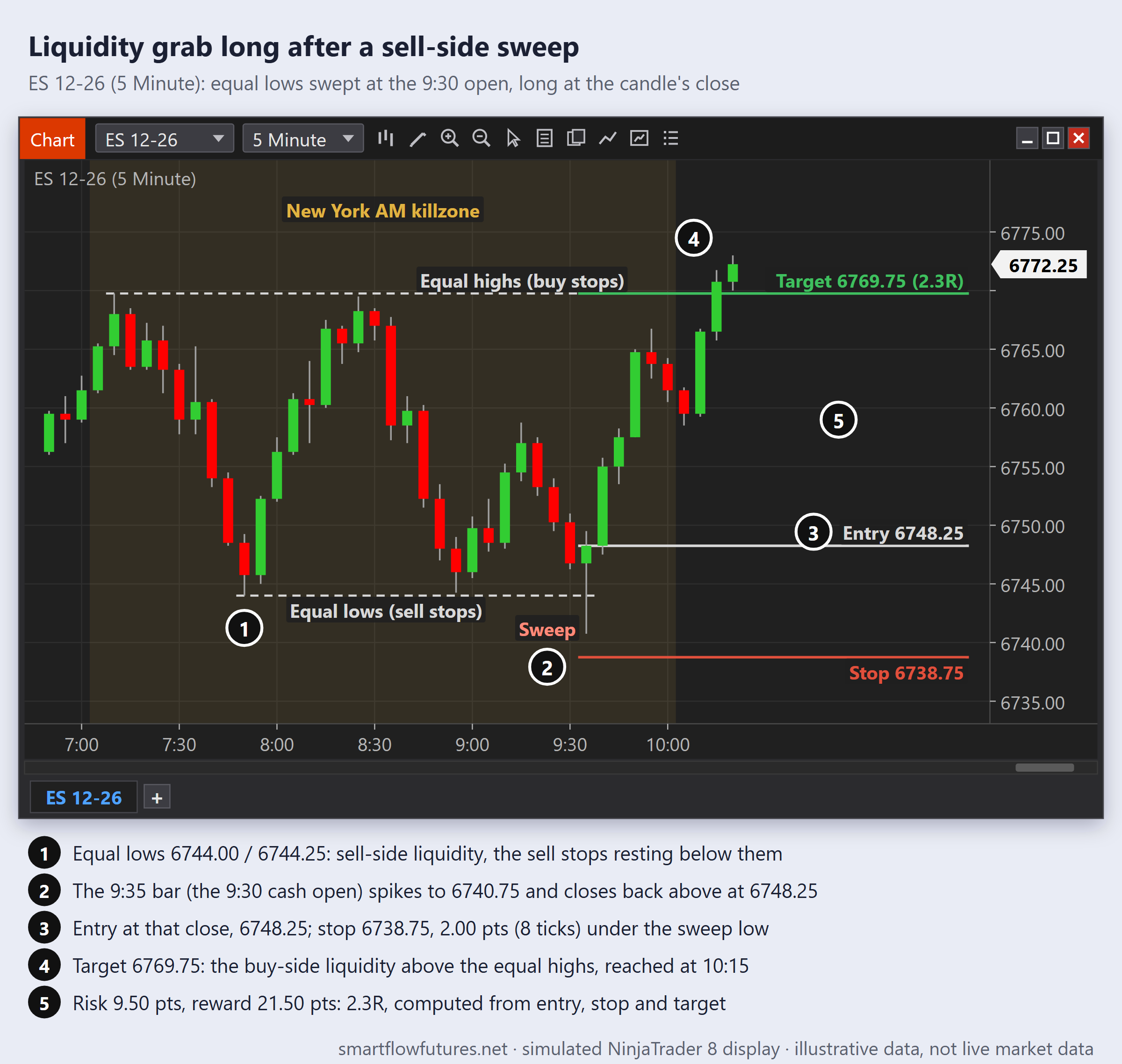
The Liquidity Grab Concept
Stops cluster at obvious levels: above swing highs (buy stops) and below swing lows (sell stops). Institutions need liquidity to fill their orders. When price runs these stop clusters, the triggered orders supply the volume large orders need; once they are absorbed, price often reverses.
The Liquidity Grab entry model trades the reversal immediately after the sweep.
Identifying Liquidity Targets
Likely Liquidity Pools:
Equal highs or equal lows. Obvious swing highs and lows. Prior day high/low. Round numbers. Triple tops or bottoms.
The more obvious the level, the more stops are likely there.
Setup Requirements
1. Clear Liquidity Target:
Identify where stops are likely resting. Multiple swing points at similar levels are best. Level should be obvious to other traders.
2. Higher Timeframe Bias:
The sweep should go against your bias direction. Example: You are bullish, price sweeps sell-side liquidity (stops below), then reverses up.
3. The Sweep:
Price must actually take out the level and close back inside it (a candle that closes beyond the level is a break, not a sweep). A quick spike through, triggering the stops. Not a slow drift: a sharp, fast grab.
4. Immediate Rejection:
After the sweep, price must reject quickly. Long wick, reversal candle, or Order Flow shift. The faster the rejection, the better.
Long Setup (After a Sell-Side Sweep)
Context: Higher timeframe bullish. Sell-side liquidity (stops below swing lows) identified.
The Sweep: Price spikes below the swing low(s), triggering sell stops, and the candle closes back above the level.
Confirmation: Immediate rejection: bullish reversal candle, lower timeframe CHOCH, or Order Flow absorption.
Entry: Enter long after confirmation. The earliest entry is the close of the candle that swept the low and closed back above it.
Stop: Below the sweep low with small buffer.
Target: Buy-side liquidity (stops above swing highs). Or the next significant resistance level.
Short Setup (After a Buy-Side Sweep)
Context: Higher timeframe bearish. Buy-side liquidity (stops above swing highs) identified.
The Sweep: Price spikes above the swing high(s), triggering buy stops, and the candle closes back below the level.
Confirmation: Immediate rejection: bearish reversal candle, lower timeframe CHOCH, or Order Flow absorption.
Entry: Enter short after confirmation. The earliest entry is the close of the candle that swept the high and closed back below it.
Stop: Above the sweep high with small buffer.
Target: Sell-side liquidity (stops below swing lows). Or the next significant support level.
Order Flow Confirmation
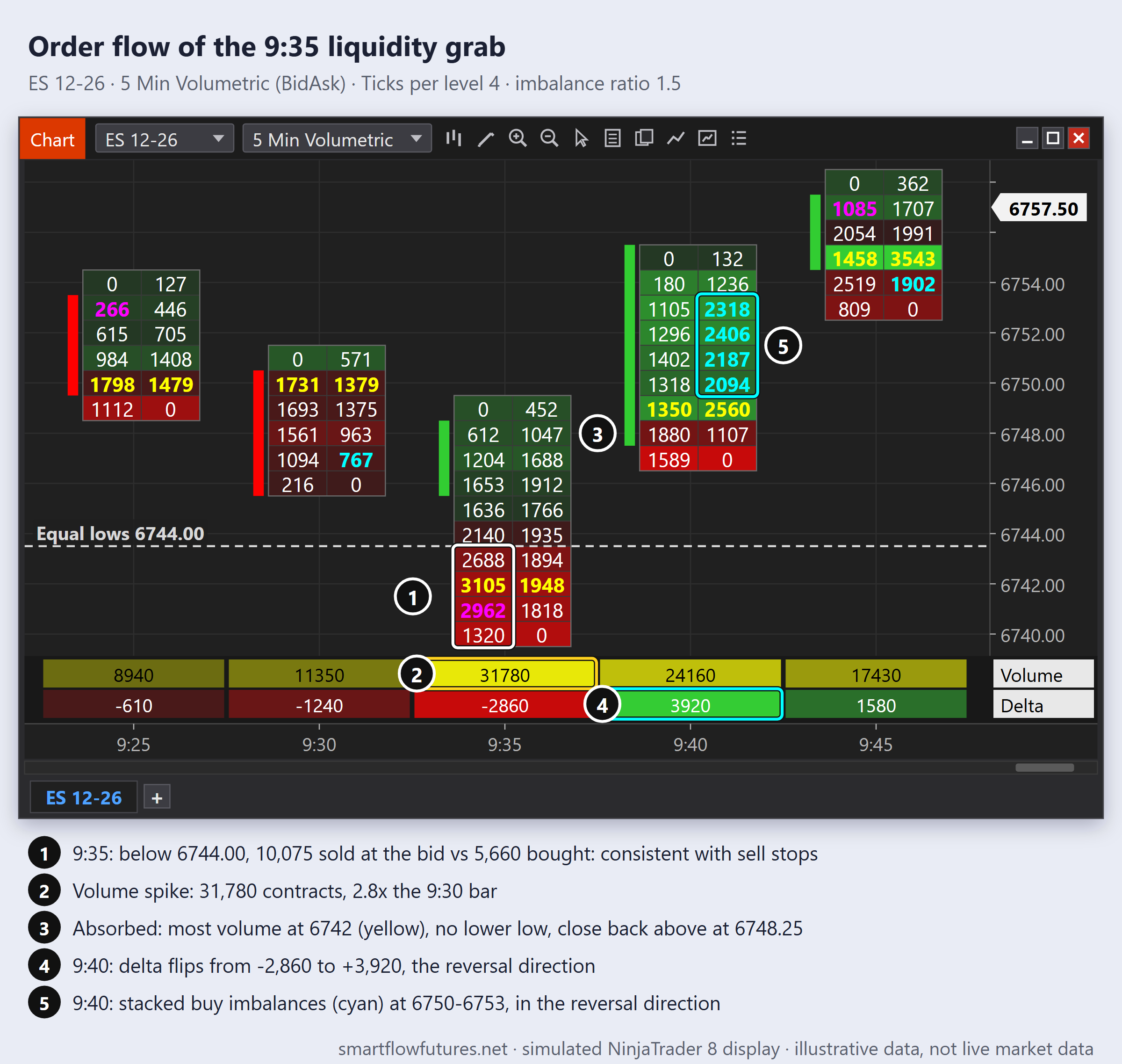
The best liquidity grab trades have Order Flow support:
On the Sweep: Aggressive prints in the sweep direction at the extreme, consistent with stops being triggered, often with a volume spike. The footprint shows them absorbed by resting orders: price fails to extend and the candle closes back inside.
On the Rejection: The next candle(s) show delta flipping to the reversal direction. Stacked imbalances in the reversal direction may follow.
Timing Considerations
Best Times: Liquidity grabs during the London (2:00-5:00 AM ET) and New York AM (7:00-10:00 AM ET) killzones tend to be cleaner. Session opens often produce liquidity grabs.
Speed of Entry: These setups move fast. Once rejection is confirmed, enter quickly. Hesitation often means missing the trade or worse price.
Risk-Reward Profile
Liquidity grab entries can offer a favorable R:R:
Stop is tight (just beyond sweep low/high). Target is the opposite liquidity pool (often substantial distance). The R:R depends on the distance to the opposite pool; compute it from your entry and stop.
The larger the R:R, the lower the win rate you need to break even; track your own win rate.
Common Mistakes
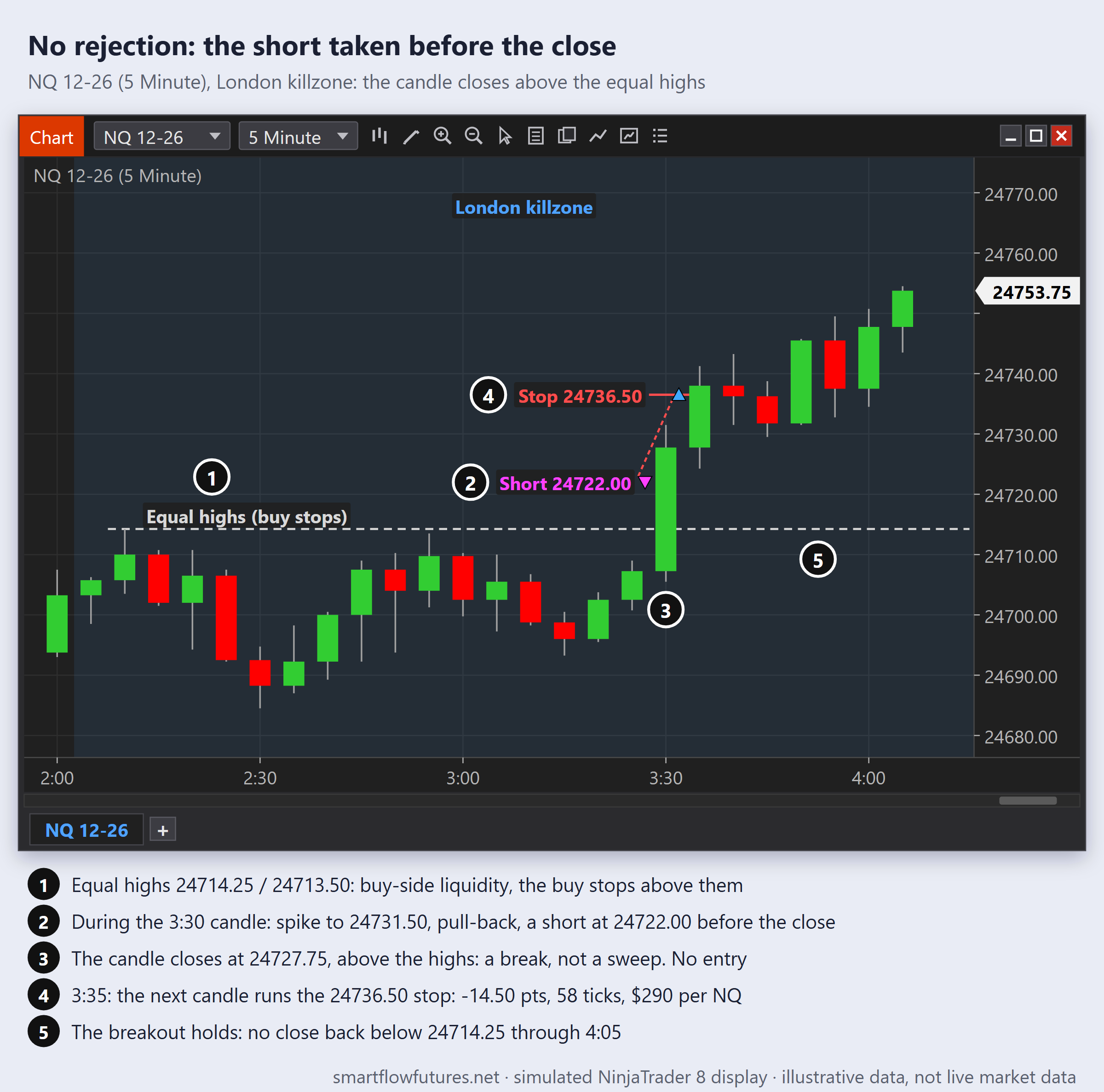
Anticipating the Sweep: Entering before the sweep occurs. Wait for the actual grab.
No Rejection: Entering while price is still beyond the level, before the candle closes back inside and the rejection is confirmed. The move might be a genuine breakout.
Against Higher Timeframe: Trading liquidity grabs against strong higher timeframe trends. The grab may fail: a later candle closes beyond the sweep extreme and the trend continues (a failed sweep).
Key Takeaways
Liquidity grabs occur when stops above highs or below lows are triggered and the candle closes back inside the level as price reverses. Setup requires clear liquidity, sweep of that liquidity, and immediate rejection. Enter after rejection is confirmed with stop beyond the sweep extreme. Order Flow confirmation (absorption at the extreme, then a delta flip) strengthens the setup. Cleaner during the London and New York AM killzones; compute the R:R from your entry, stop and the opposite pool. Do not anticipate: wait for actual sweep and rejection.