
Building a Risk Management Plan: Your Trading Safety Net
Create a comprehensive risk management framework that protects your capital and ensures long-term trading survival.
A trading strategy without a risk management plan is like a car without brakes. You might go fast for a while, but eventually you will crash. Professional traders understand that protecting capital is more important than making money. This article walks you through building a complete risk management plan: your trading safety net through all market conditions.
Without a Plan
- Emotional decisions during drawdowns
- Inconsistent position sizing
- No clear stop loss rules
- Revenge trading after losses
- Account blowups are inevitable
With a Plan
- Rules-based decisions always
- Consistent risk per trade
- Predefined exit criteria
- Structured response to losses
- Long-term capital preservation
Every hedge fund, prop firm, and professional trading desk has written risk management policies. These are not optional guidelines but mandatory rules. Your personal trading deserves the same level of structure.
Core Components of Your Plan
Component 1
Component 2
Component 3
Component 4
Component 5
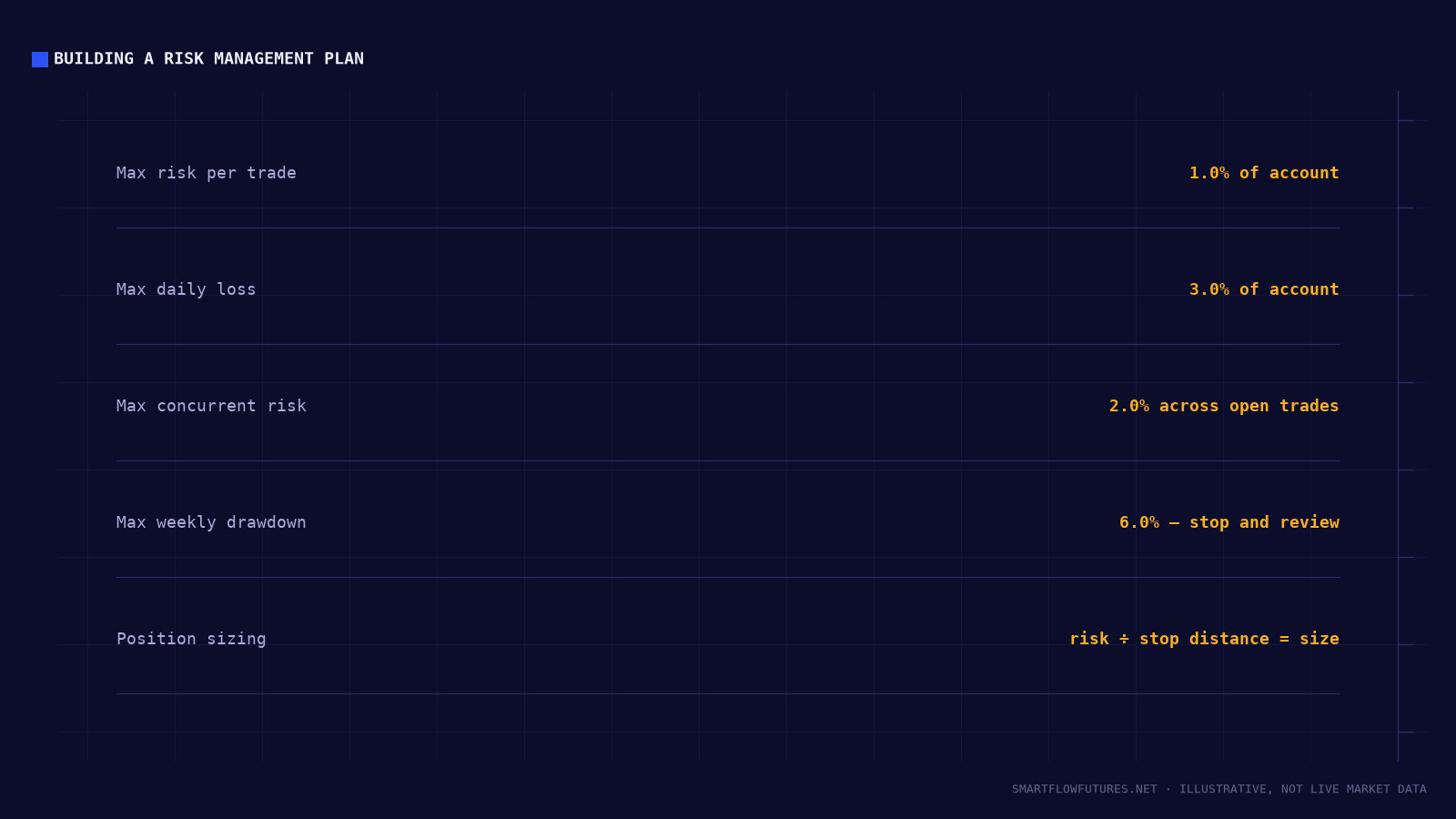
Sample Risk Parameters
| Parameter | Conservative | Moderate | Aggressive |
|---|---|---|---|
| Per-Trade Risk | 0.5% | 1% | 2% |
| Daily Loss Limit | 1.5% | 3% | 5% |
| Weekly Loss Limit | 3% | 6% | 10% |
| Max Drawdown | 10% | 15% | 25% |
| Max Open Positions | 2 | 3 | 4 |
| Max Correlated Exposure | 1% | 2% | 3% |
If you are new to trading or rebuilding after losses, start with the conservative column. You can always increase risk as you prove consistency. Starting aggressive often leads to account damage before skills develop.
Position Sizing Rules
Example Calculation
Account: $50,000 | Risk: 1% ($500) | Stop Loss: 10 points on ES | Point Value: $50
Contracts = $500 ÷ (10 × $50) = $500 ÷ $500 = 1 contract
- Always calculate before entry: Never enter a trade without knowing your position size first.
- Adjust for volatility: Wider stops in volatile markets mean smaller positions.
- Round down, not up: When in doubt, take the smaller size.
- Account for slippage: Add buffer to your stop loss distance for accurate sizing.
Loss Response Protocol
Continue trading normally. Document the trade. One loss is part of trading and means nothing statistically.
Take a 15-minute break. Review both trades. Confirm you followed your plan. If yes, continue. If no, stop for the day.
Stop trading for the day regardless of P&L. Three losses indicates either poor market conditions or execution issues. Review tomorrow.
Close all positions. Close trading platform. Do not return until next trading day. Journal extensively about what happened.
Take remainder of week off. Conduct thorough review of all trades. Consider reducing size when you return. Consult mentor if available.
Your Written Plan Template
Account Size: $________
Per-Trade Risk: ____% = $________
Daily Loss Limit: ____% = $________
Weekly Loss Limit: ____% = $________
Maximum Drawdown: ____% = $________
Maximum Open Positions: ____
Maximum Correlated Positions: ____
After 2 consecutive losses I will: ________________
After 3 consecutive losses I will: ________________
When I hit daily limit I will: ________________
Signature: ________________ Date: ________
Print this plan, fill it out by hand, sign it, and post it where you can see it while trading. The physical act of signing creates psychological commitment. Update it monthly as your account grows or shrinks.
Your risk management plan is your trading insurance policy. Define your per-trade risk, daily and weekly limits, maximum drawdown, and loss response protocol in writing. Follow these rules religiously regardless of how you feel. The traders who survive long-term are not the ones with the best entries but the ones with the best risk management.